
Maximize Property ROI: San Diego Multi-Family ADU & SB-9 Developers
In San Diego’s highly competitive real estate market, acquiring new high-cap-rate properties is increasingly difficult. The most sophisticated investors are no longer just buying new buildings; they are engineering “Forced Appreciation” within their existing assets. By strategically utilizing Multi-Family ADU legislation, the San Diego ADU Bonus Program, and SB-9 lot splits, MEE Builders partners with investors to transform underutilized parcels into high-yield, multi-unit income generators.
- Fully Licensed & Insured: CSLB #1046249
- 10 Years of Excellence: Serving the San Diego, CA
- 100+ Verified Reviews Google, Yelp, Houzz
Engineering "Hidden Density" Into Existing San Diego Assets
We do not just look at blueprints; we analyze your financial model. Adding multiple Accessory Dwelling Units to a property fundamentally changes its asset class. A single-family rental generating $3,500/month can be re-engineered into a triplex or fourplex generating $10,000+/month. You are adding highly appraised square footage at baseline construction costs, capturing instant equity upon completion, and drastically increasing your Net Operating Income (NOI) without acquiring new land.
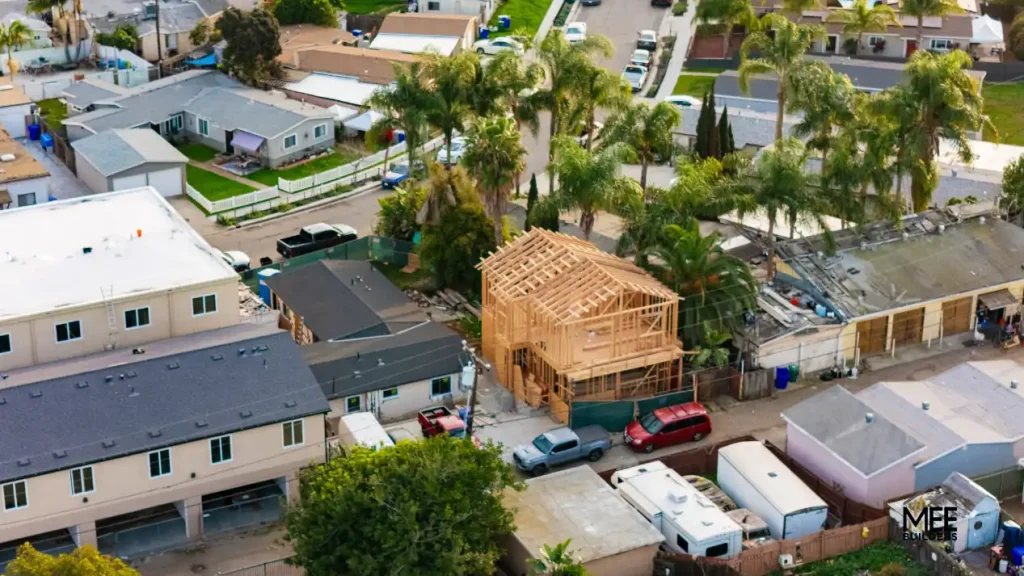
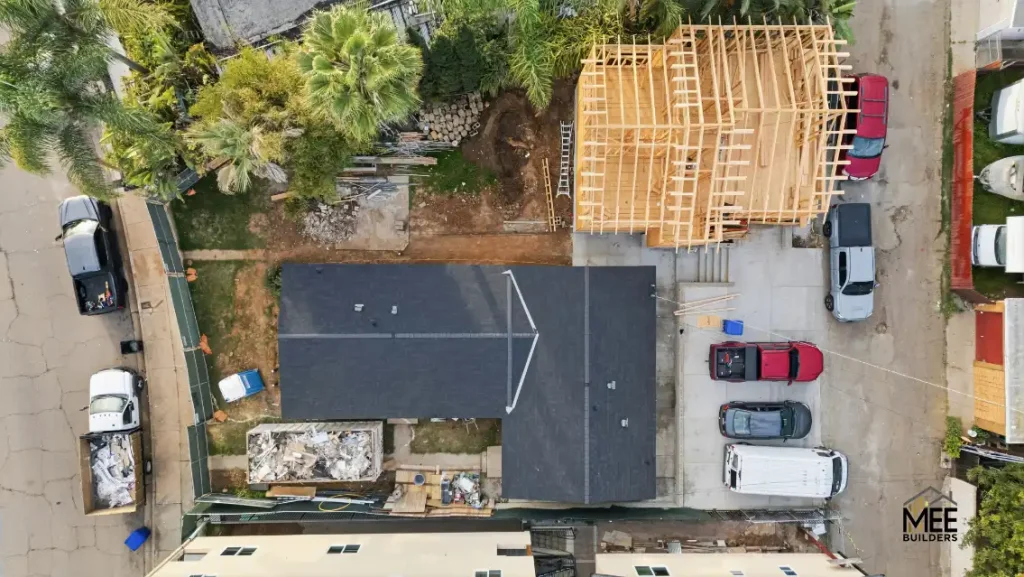
Navigating San Diego Multi-Family ADU Laws & Zoning Codes
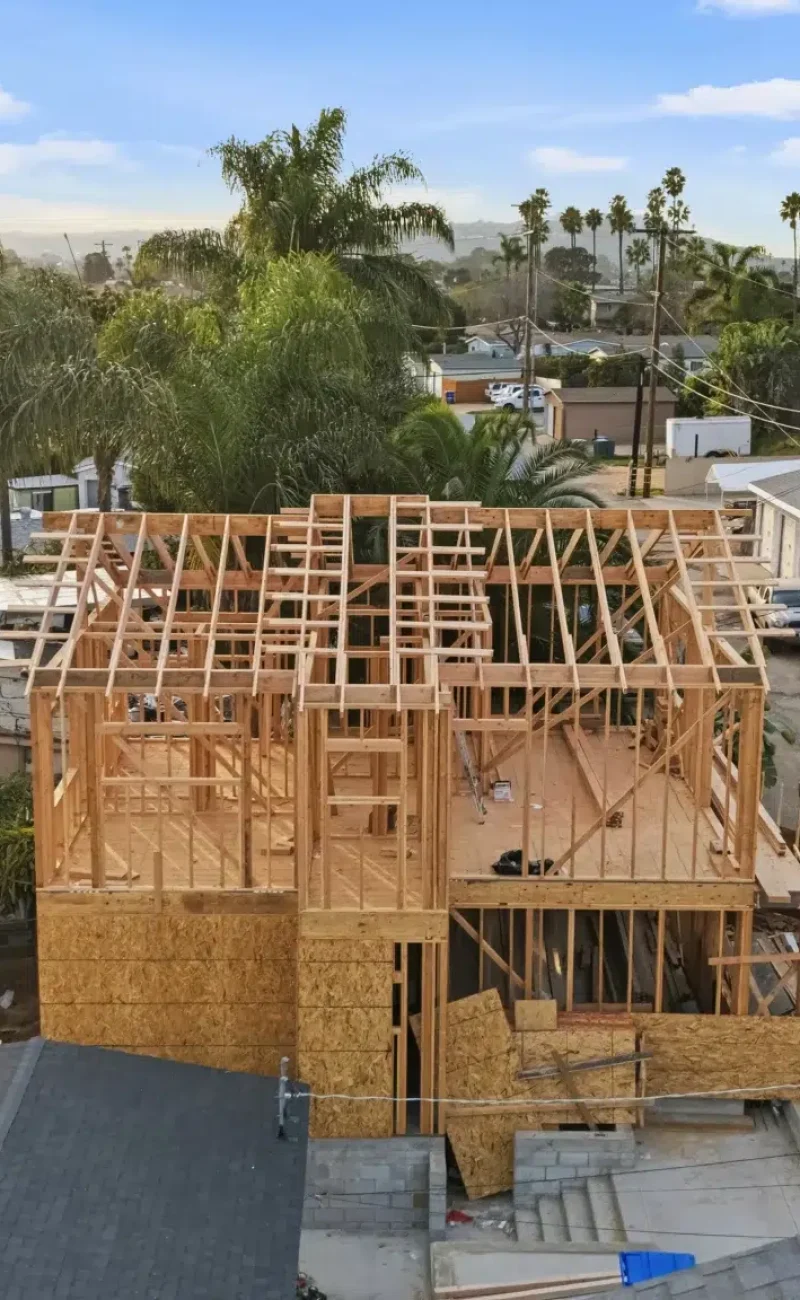
To successfully execute multi-unit expansions, a builder must possess absolute fluency in the latest California and San Diego municipal codes. MEE Builders navigates these complex legislative frameworks to extract the maximum legal density from your lot.
How to Leverage the San Diego ADU Bonus Program for Max Density
San Diego offers one of the most aggressive density bonus programs in the state. Under the 2026 updated guidelines, property owners can build additional “Bonus” market-rate ADUs in exchange for deed-restricting a unit as affordable housing. Depending on your lot size and proximity to a Transit Priority Area (TPA), this program allows investors to systematically scale their unit count—engineering a highly lucrative micro-community on a standard residential lot
Converting Non-Habitable Multi-Family Spaces into ADUs
If you already own a multi-family property (duplex, triplex, or apartment building), recent state legislation (SB 1211) has radically expanded your development rights. Investors can now build up to eight new detached ADUs on an existing multi-family lot (not exceeding the number of existing units). Furthermore, you can convert non-habitable spaces—such as storage rooms, boiler rooms, or detached garages—into habitable ADUs.
Leveraging SB-9: The “Lot Split” Strategy
California Senate Bill 9 (SB-9) allows property owners to legally subdivide a single-family residential lot into two separate parcels. Once split, each new parcel can typically host a primary residence and an ADU. MEE Builders manages this entire entitlement process—from the tentative map approval with the city to the final utility trenching—effectively turning one deed into two liquid assets.
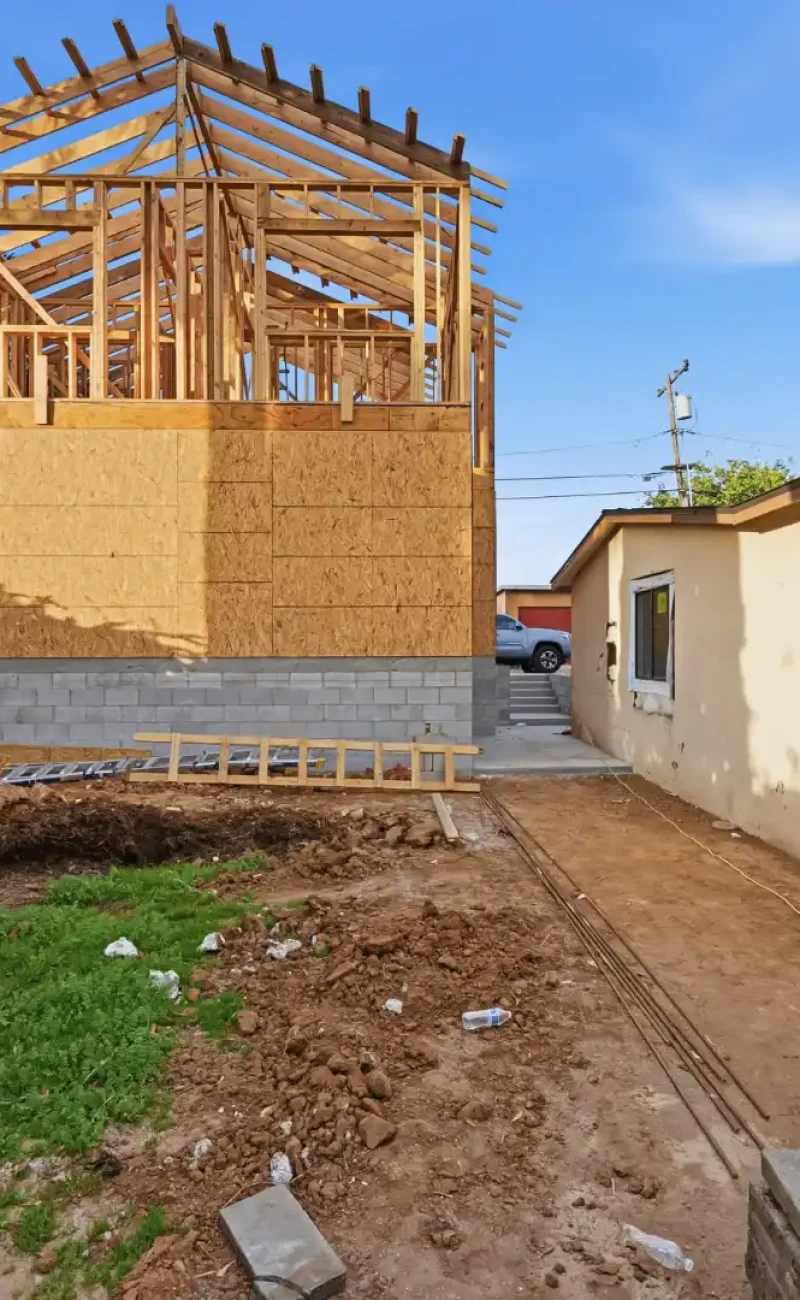
Economies of Scale in Multi-Unit ADU & JADU Development
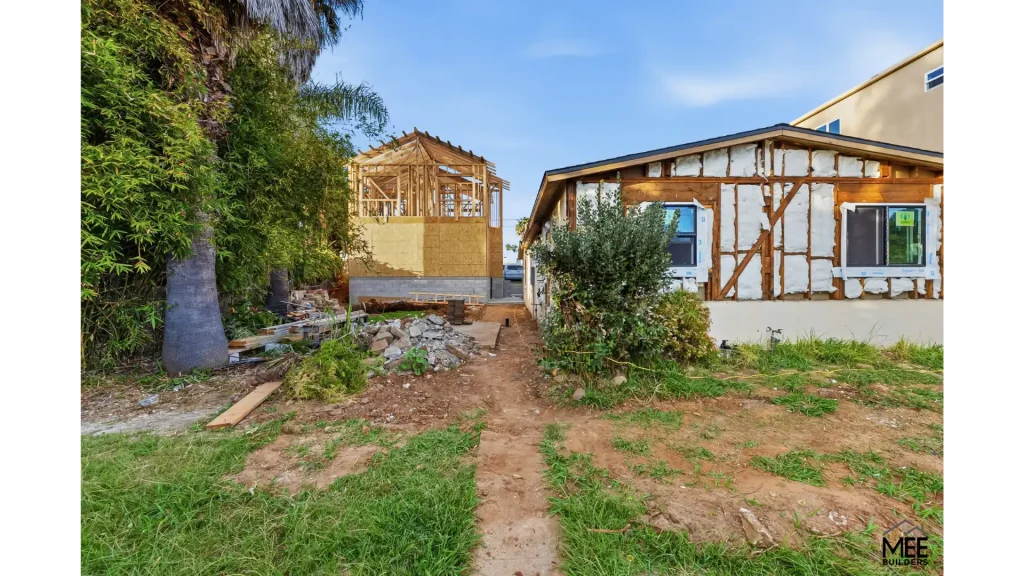
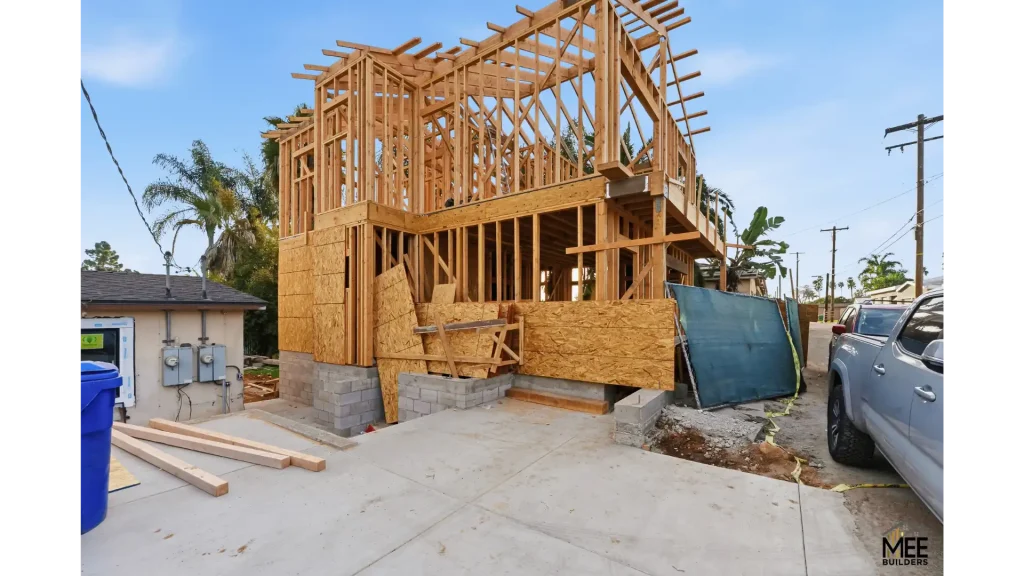
Executing a multi-unit project requires a commercial approach to construction management to protect your ROI.
Concurrent Construction and Shared Infrastructure
We maximize your capital by building multiple units simultaneously. We mobilize the heavy machinery, execute deep utility trenching, and coordinate the 400-amp electrical service upgrades once. By building a detached ADU while concurrently converting a garage into a JADU, we drastically slash your “per-door” construction costs and accelerate the timeline to your Certificate of Occupancy.
Building for “Tenant-Proof” Durability (Low CapEx)
An investment property is a machine that must run efficiently. We engineer our multi-family ADUs for high durability and Low Capital Expenditure (CapEx). By installing 100% waterproof Luxury Vinyl Plank (LVP) flooring, stain-resistant quartz countertops, and highly durable conversion-varnish cabinetry, we minimize your turnover costs. When a tenant moves out, you require a cleaning crew, not a renovation contractor

Frequently Asked Questions For Real Estate Investors in San Diego
Does rent control apply to new ADUs in San Diego?
In California, new construction (Certificate of Occupancy issued within the last 15 years) is generally exempt from statewide rent caps (AB 1482). This allows you to keep rents at market rate, a crucial factor for long-term ROI. Always consult with a real estate attorney to confirm specific local nuances.
Can I sell an ADU separately from the main house in California?
Traditionally, no (unless you use SB-9 to split the lot). However, a new law (AB 1033) is beginning to allow ADUs to be sold as condominiums in certain cities. San Diego is still adapting to this, and we closely monitor these regulations to alert our clients the moment “condoization” becomes a viable exit strategy.
How does financing work for multi-unit ADU construction?
You don’t need cash. Many investors use Renovation Loans (like HomeStyle or 203k) or HELOCs on the primary property. Some lenders can even use the future projected rental income of the ADU to help you qualify for the loan, improving your Debt-to-Income ratio immediately
What is the most profitable size for a San Diego investment ADU?
For maximum ROI, we recommend 2 bedrooms / 1 bath (approx. 600-750 sq. ft.). Why? A 2-bedroom unit commands significantly higher rent than a 1-bedroom (appealing to roommates, small families, or work-from-home couples), but costs only marginally more to build since you still only need one kitchen and one bathroom.
Will adding ADU units trigger a tax reassessment for my California property?
Generally, no. This is a massive advantage for California investors protected by Proposition 13. The County Assessor typically only adds the value of the new construction to your existing tax bill. Your original, low tax base for the land and main structures remains unchanged. This results in a “blended assessment” that keeps your overhead low and your Cap Rate high, unlike buying a new property where the taxes reset to current market value