
San Diego Custom Home Design-Build for Complex Coastal and Hillside Lots
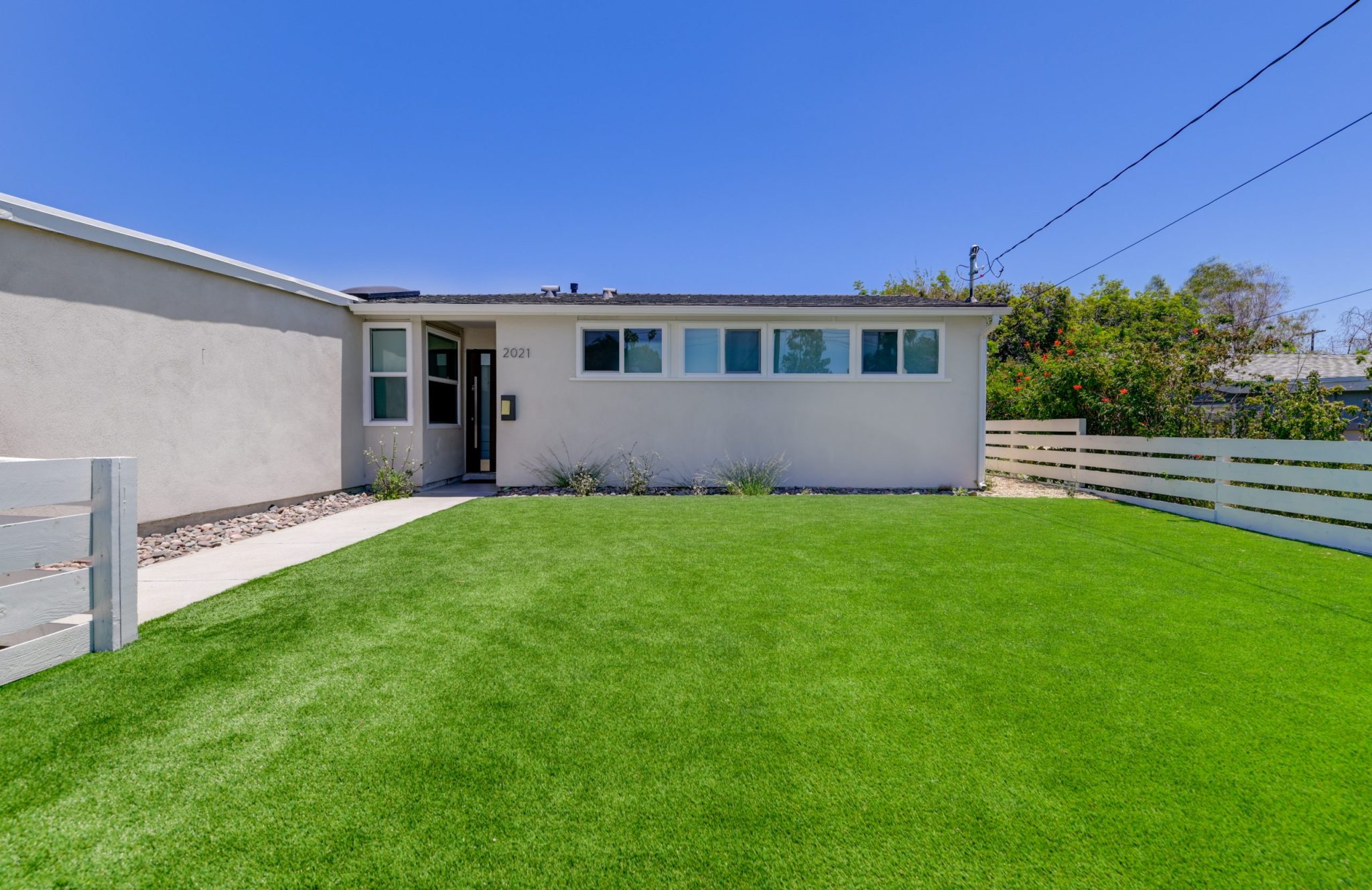
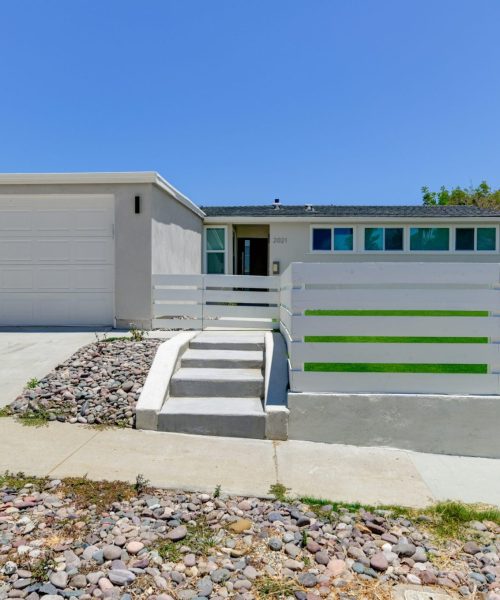
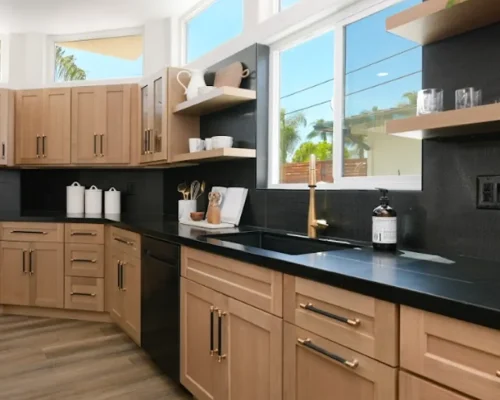
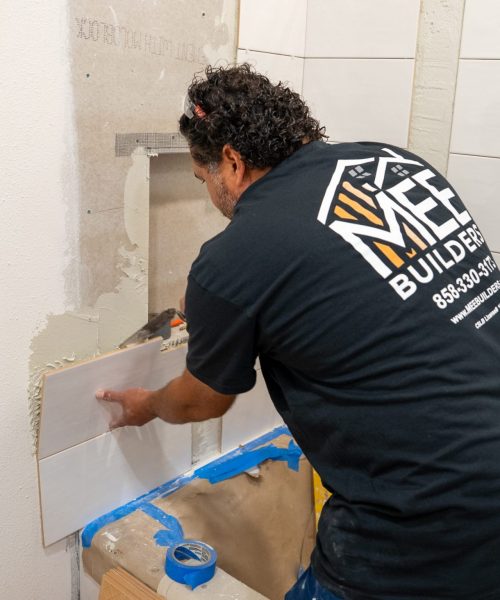
What Makes a Luxury Custom Home Build Different in San Diego?
A custom home builder San Diego project requires synthesizing architectural vision with rigorous municipal codes. MEE Builders executes ground-up construction of bespoke luxury residences, implementing site-specific structural engineering to ensure immediate compliance with the updated Section 1208.3 habitable space mandates and 2026 Wildland-Urban Interface fire safety regulations
- Fully Licensed & Insured: CSLB #1046249
- 10 Years of Excellence: Serving the San Diego, CA
- 100+ Verified Reviews Google, Yelp, Houzz
How Coastal Lots, Hillsides, and Views Shape Custom Home Design in San Diego
Executing ground-up construction across San Diego requires profound familiarity with the region’s highly variable physical environment and rigid municipal codes. Operating from a centralized headquarters at 8400 Miramar Rd suite 200a- located precisely 12 minutes from the San Diego Zoo and Balboa Park- MEE Builders ensures rapid deployment of engineering and framing crews to all Metro San Diego sites.
The primary challenge in the local market is severe site complexity. San Diego’s diverse topography, encompassing deep canyons, steep inland hillsides, and sensitive coastal bluffs, requires advanced engineering and specific setback knowledge that generalist contractors frequently treat as an afterthought.
Furthermore, the region is defined by highly localized microclimates and destructive soil conditions. Properties in coastal zones are exposed to relentless marine moisture and saltwater corrosion, while inland foothill communities are built on heavy, expansive clay Vertisols that expand and contract with seasonal weather changes. Addressing these unique geological realities from the absolute inception of the project is the defining characteristic of a structurally viable custom home.

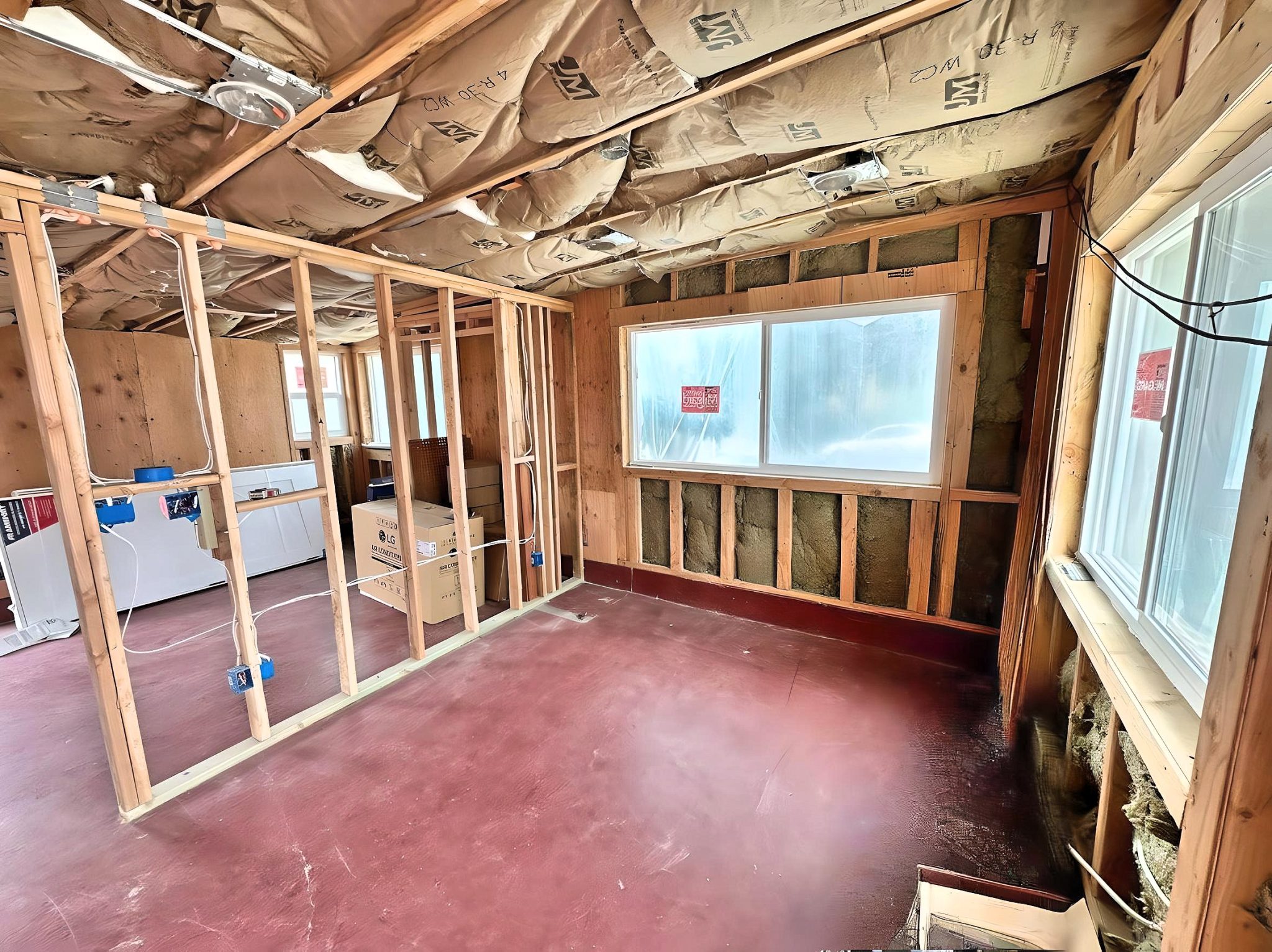
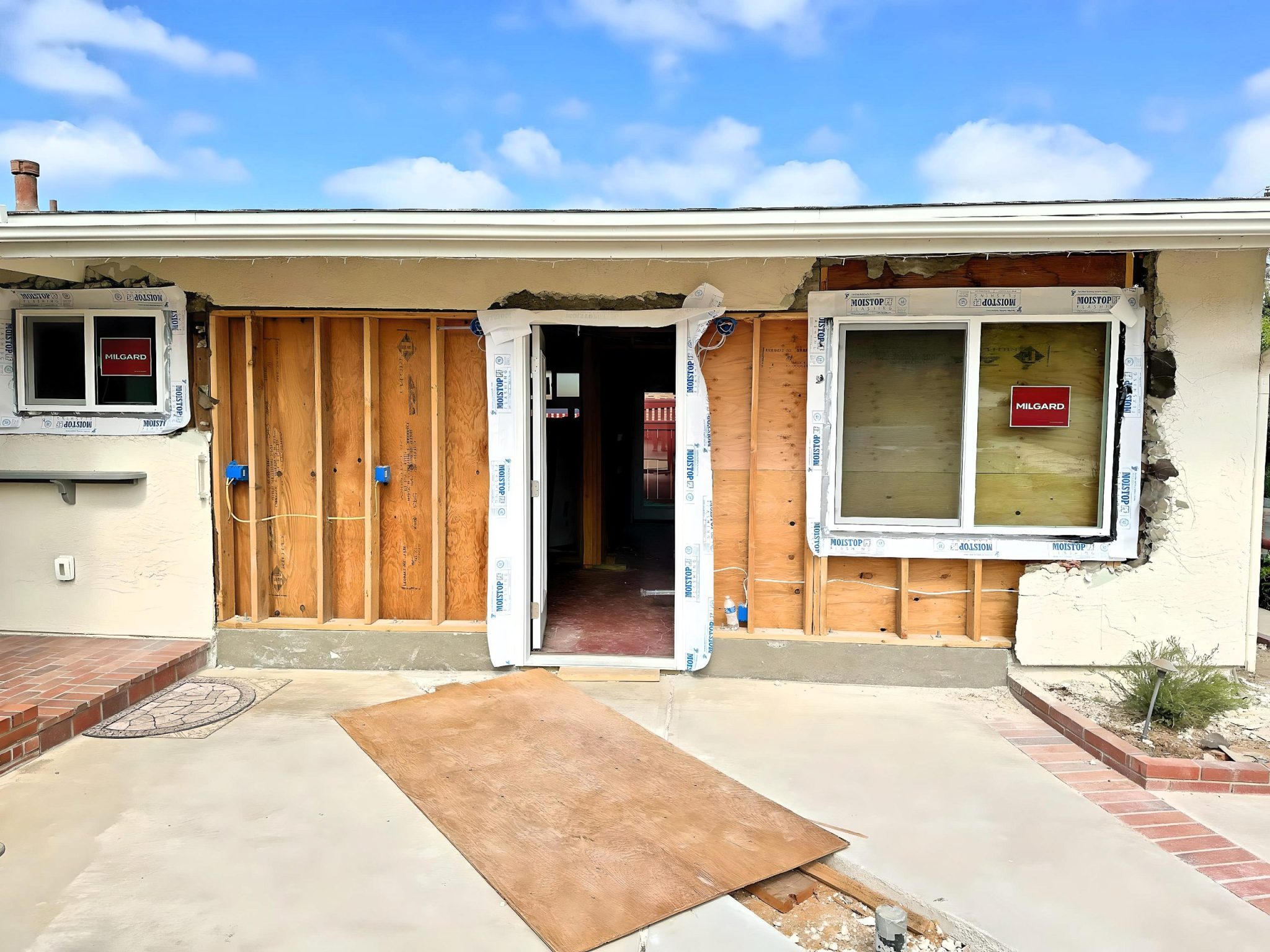
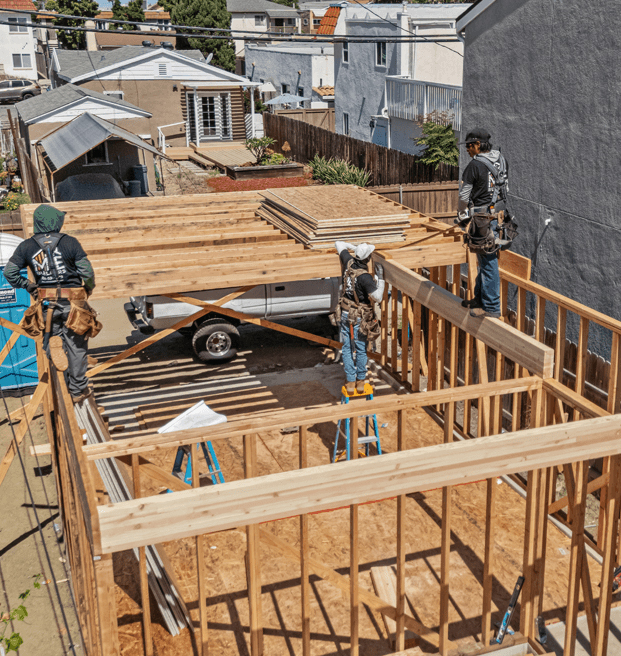
Direct Builder Oversight From Architectural Plans to Field Execution
The fatal flaw in traditional luxury construction is the disconnect between the architect who drafts the aesthetic concept and the contractor who physically assembles it. An architect may design a breathtaking cantilevered deck over a natural canyon, but if that design fails to account for the required 40-foot slope setback, the local geotechnical restrictions, or the structural shear loads required by the California Building Code, the blueprints are functionally useless and will be immediately rejected by the city planner.
MEE Builders fundamentally resolves this disconnect through a proprietary “Build-Ready Architecture” model. By synthesizing 10 years of precise violation-resolution data, the firm pre-vets every architectural line against San Diego’s exact municipal realities. Under the direct, daily oversight of owner Yaron Gauzner, the same entity that verifies the structural load paths of the steel framing is actively negotiating permit fees and orchestrating the monolithic foundation pour.
This centralized point of authority eliminates the “redesign loops” and corporate hand-off errors that stall standard projects. The firm engineers bulletproof structural and legal frameworks, transforming a complex topographical site into a flawless, code-compliant luxury estate.
Minimum Habitable Space Rules That Shape Custom Home Plans in San Diego
Under current municipal codes aligned with California Building Code updates, all new dwelling units constructed in San Diego must have a minimum of 190 square feet of habitable space. Habitable space is rigorously defined by the code, encompassing finished and heated floor areas fully enclosed by interior surfaces.
These spaces must maintain a minimum headroom of six and one-half feet and include working, living, eating, cooking, and sleeping areas. This calculation strictly excludes auxiliary areas such as garages, carports, unfinished basements, hallways, and exterior cellars.
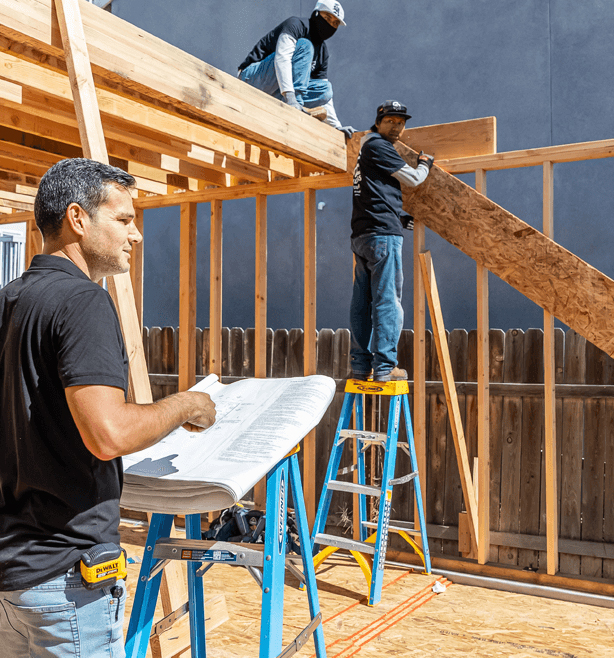

Mastering Section 1208.3 Compliance
2026 Building Codes: Mastering Section 1208.3 Habitable Space Mandates.
The 2026 adoption of updated California Building Standards Code (CBSC) regulations introduces critical shifts in spatial planning for residential construction. Central to this is the strict enforcement of Section 1208.3 Compliance. Historically, San Diego permitted smaller efficiency dwelling units under heavily modified local amendments, specifically requiring a minimum living room area of 150 square feet. However, the updated legislative framework repeals the older efficiency unit definitions and mandates strict adherence to a new statewide baseline.
Planning Accessory Buildings That Fit the Main Home and the Lot
For a custom home builder, this mandate is highly relevant when designing sprawling luxury estates that incorporate auxiliary structures, such as detached guest quarters, multi-generational living suites, or integrated Accessory Dwelling Units (ADUs). Under the San Diego Municipal Code, a custom property may include a detached ADU up to 1,200 square feet, provided it maintains required fire-safety separations. However, regardless of the maximum allowable size, every detached habitable structure designed into the property’s master plan must independently satisfy the Section 1208.3 Compliance threshold.
MEE Builders integrates this exact mathematical requirement into the primary drafting phase, ensuring that no auxiliary unit triggers a “red tag” rejection during the initial Development Services Department (DSD) plan check.
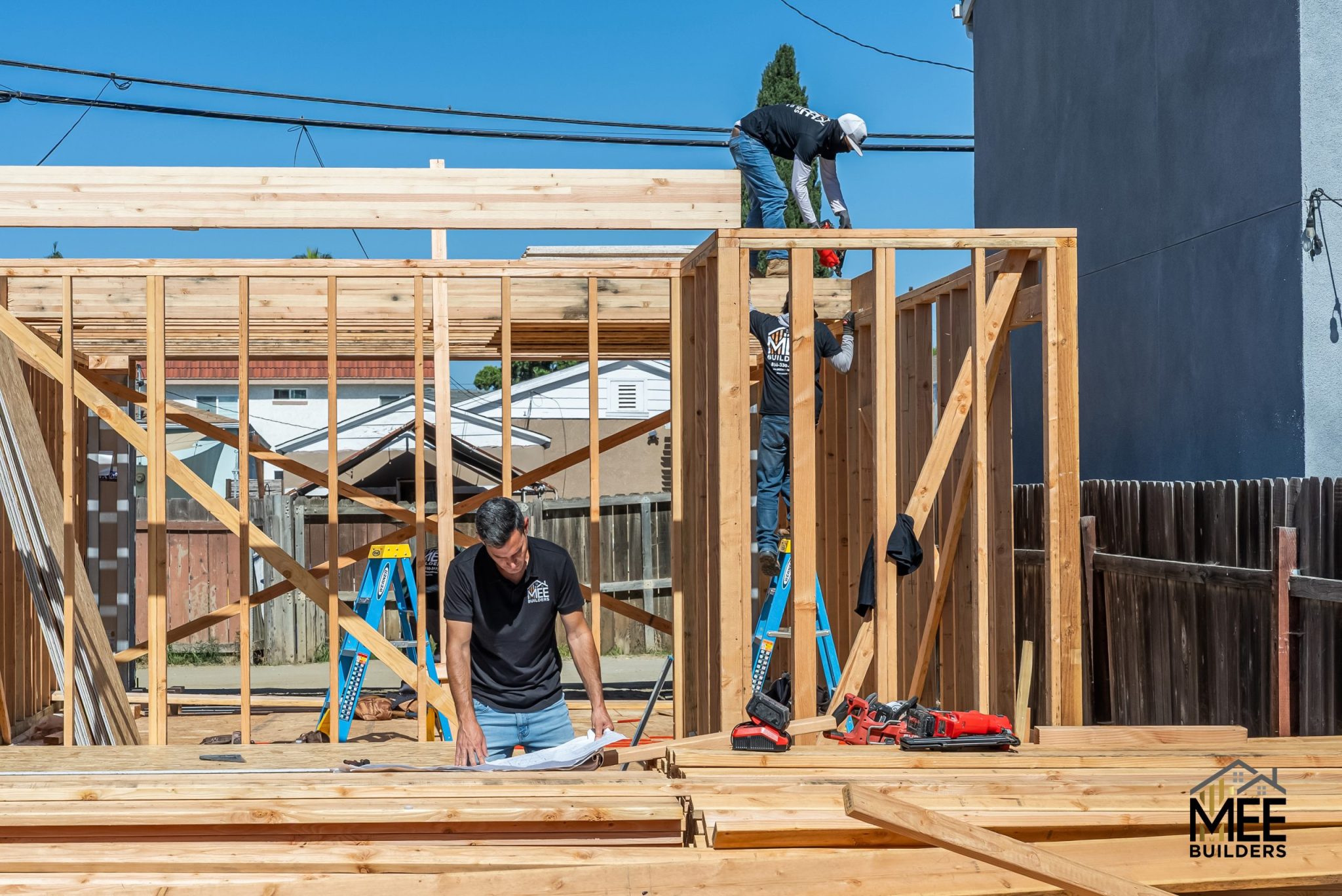

San Diego Pre-Construction Planning, Permits, and Site Readiness
Before heavy earth-moving equipment can arrive at a San Diego lot, the project must undergo rigorous municipal vetting. Information Bulletin 501 (IB 501) dictates the comprehensive fee schedules and submittal requirements for construction permits within the City of San Diego. The administrative friction at this stage frequently stalls poorly planned projects for months, but a knowledgeable builder neutralizes these delays through precise front-end engineering.
How Information Bulletin 501 Affects Custom Home Permits in San Diego
IB 501 outlines the requirement to pay General Plan Maintenance Fees and precise Mapping Fees when geographic documents are used for project review.11 Furthermore, custom home builds trigger the assessment of Building Standards Fees, mandated by Health & Safety Code Section 18931.6, which fund the development of green building standards. The total project valuation dictates these specific assessments, calculated at a rate of four dollars per one hundred thousand dollars in valuation.
Impact fees, including Development Impact Fees (DIF) and School Fees mandated by local districts, are assessed based on the total square footage of the new construction. Additionally, if the raw land requires new municipal utility tie-ins, the San Diego County Water Authority will assess capacity fees based precisely on the size of the installed water meter. MEE Builders isolates the exact capital requirements for these overlapping municipal assessments before a single trench is dug.
Permit, Mapping, School, and Utility Fees That Affect Custom Home Budgets
Plan Dept. Funding
GIS Data Utiilization
Health & Safety Code Sec. 18931.6
Local District Assessment
Meter Capacity Installation
SWPPP and Stormwater Compliance Before Breaking Ground in San Diego
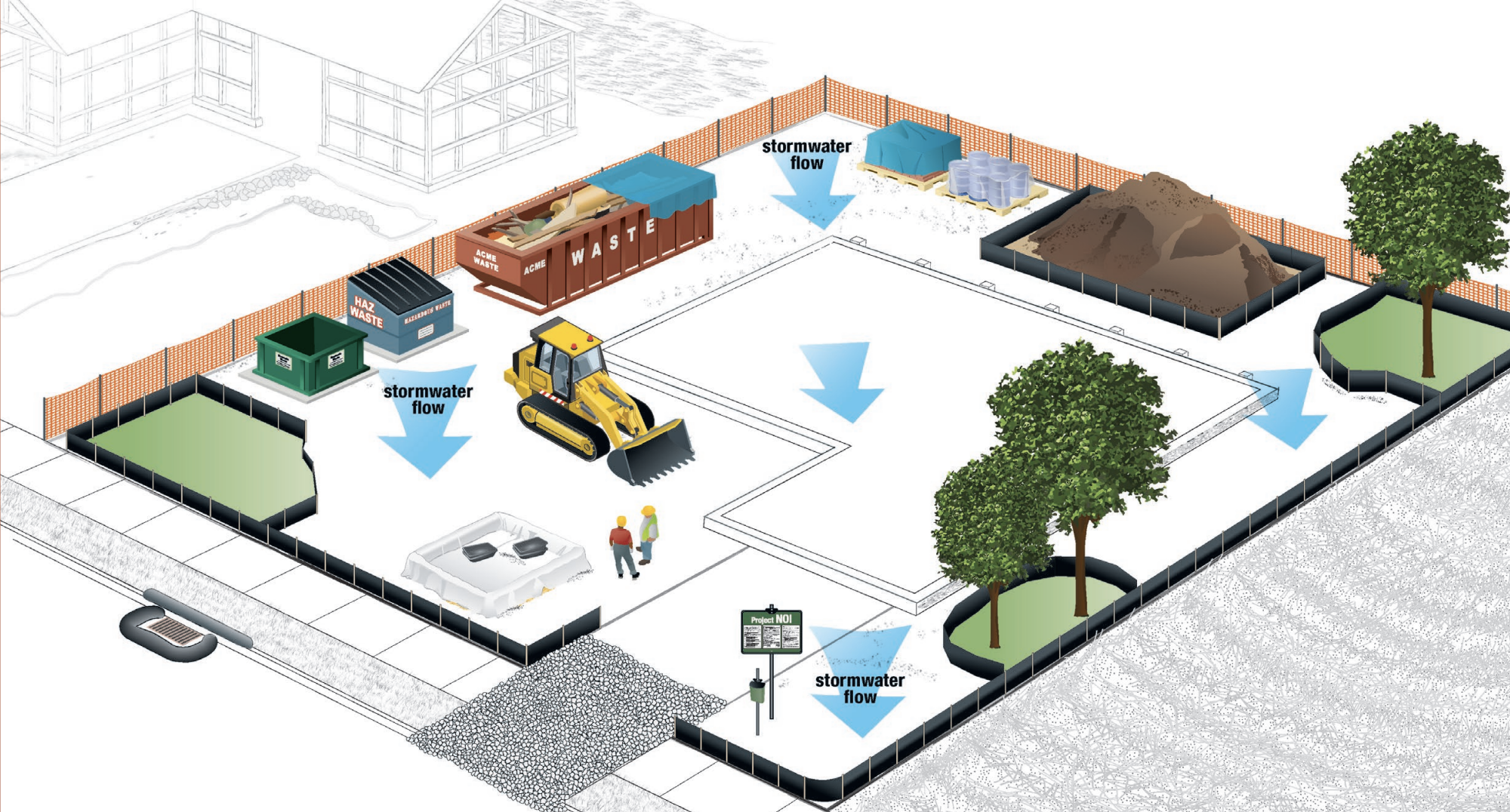
Disruption of a natural lot during grading and excavation creates significant environmental liabilities. If the raw soil is exposed to seasonal rains, heavy sediment and chemical pollutants can rapidly wash directly into San Diego’s protected watershed.
For large custom estates, particularly those disturbing one acre or more of soil, the state requires coverage under the Construction General Permit, mandating the development of a comprehensive Storm Water Pollution Prevention Plan (SWPPP). Even for smaller, sub-acre residential lots, the City of San Diego demands a localized Water Pollution Control Plan (WPCP).
Site preparation requires installing continuous perimeter silt fences, deploying heavy-duty fiber rolls across graded slopes to slow water velocity, and constructing stabilized gravel construction entrances to prevent heavy equipment from tracking mud onto municipal asphalt.
The site must be monitored for pH and turbidity levels, ensuring zero tolerance for illicit discharge.15 This rigorous civil engineering prevents devastating stop-work orders from the Regional Water Quality Control Board
Securing Structural Viability In San Diego's Complex Seismic Zones
The physical construction of a luxury home is heavily influenced by the soil on which it sits. San Diego is defined by rolling hillsides, steep coastal canyons, and complex soil mineralogies that aggressively reject standard, builder-grade foundations
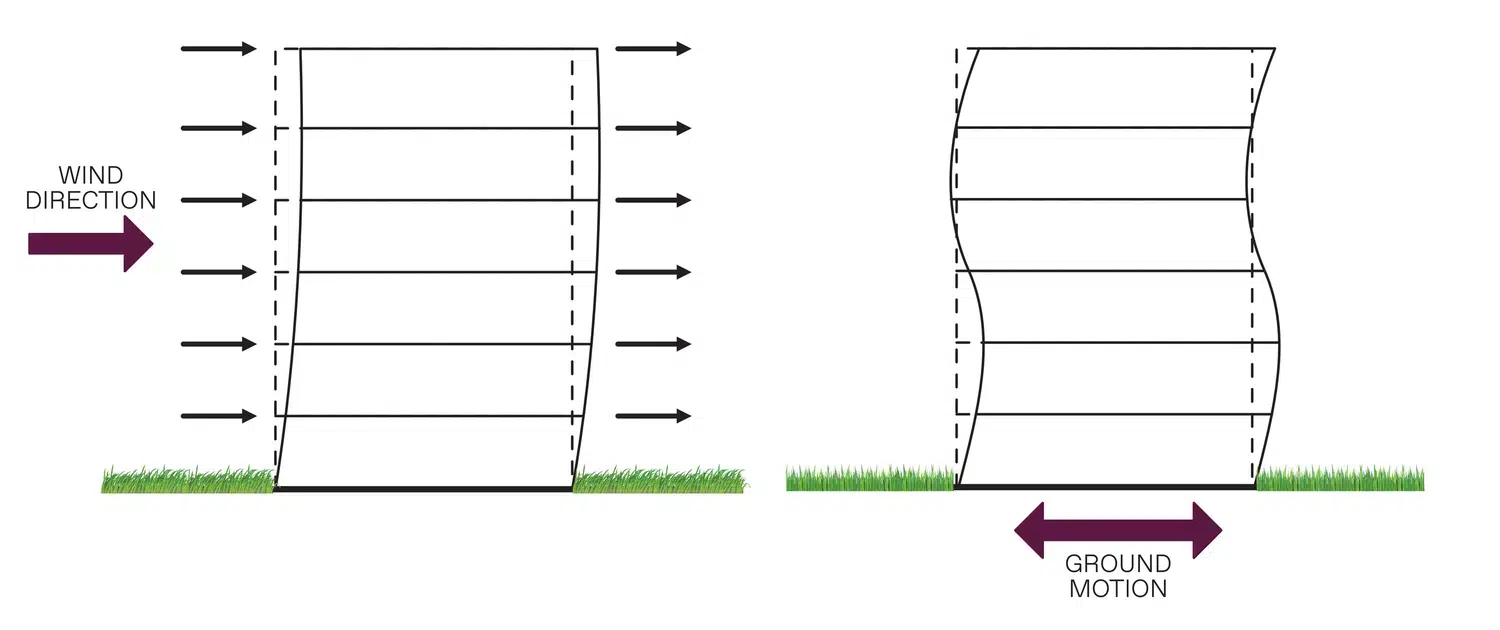
Once the foundation cures, vertical framing begins. Designing a structure in San Diego requires engineering for massive lateral loads generated by both high wind events and seismic activity.
The building’s inertia resists the dynamic side-to-side motion of an earthquake, generating massive forces that can cause sway, cracking, or catastrophic collapse if not properly transferred down to the foundation.

When a Geotechnical Soil Report Is Required for a San Diego Custom Home
A custom home cannot legally or physically proceed without a comprehensive Soil Report. Under San Diego Information Bulletin 515 (IB 515), a preliminary geotechnical investigation is legally mandated for any proposed development located on a slope of 25 percent or greater, or any site situated within specific Geologic Hazard Categories.16 The City’s Seismic Safety Study explicitly maps these hazard zones, requiring a state-licensed geologist or civil engineer to formally evaluate the land.
Inland areas often have expansive clay soils, specifically Vertisols such as the Diablo and Las Flores series. These soils contain a high concentration of smectitic minerals that expand rapidly when exposed to winter rains and contract significantly during the dry summer months.
This repetitive kinetic stress generates immense upward hydrostatic pressure, capable of snapping a standard concrete slab in half. The Soil Report specifies the exact structural requirements for the foundation, including the required soil bearing pressure capacities—often set at 2,000 pounds per square foot (psf) for standard dead and live loads—and mandates deep foundation support systems to bypass the volatile upper layers of colluvium and clay.
Building on Coastal and Hillside Lots Without Triggering Avoidable Redesigns
For properties located within 100 feet of a coastal bluff edge, the engineering requirements multiply exponentially. The San Diego Municipal Code enforces the Environmentally Sensitive Lands (ESL) regulations, which require a 40-foot setback from the top of the slope to prevent the new structure’s massive dead weight from triggering a localized landslide. Coastal bluffs are highly dynamic landforms subjected to constant grain-by-grain erosion from marine environments, subaerial forces, and groundwater seepage.
The geotechnical design must guarantee the structure remains safe and entirely freestanding over an anticipated 75-year design life, operating under the assumption that the surrounding soil may eventually erode.
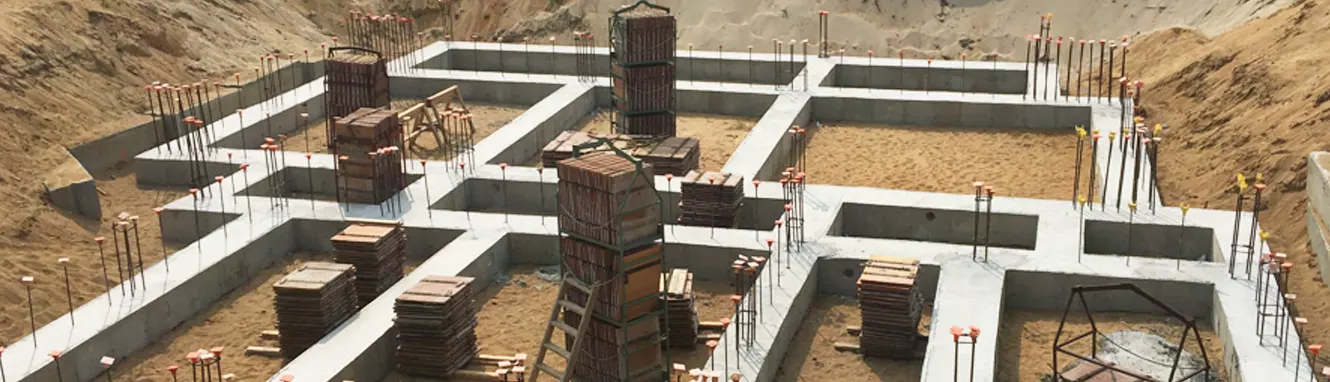
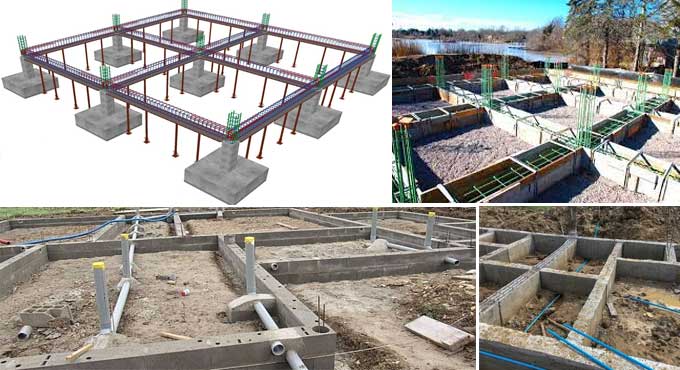
Caissons and Grade Beams for Hillside and High-Load Foundation Design
When developing a custom home on a steep San Diego hillside or over heavily expansive clay, a standard shallow “slab-on-grade” foundation is entirely insufficient. Shallow slabs float on the soil surface and are highly susceptible to seasonal movement, edge lift, and frost heave. To protect a multi-million-dollar estate from shifting topography, engineers mandate the use of deep foundation systems utilizing a Grade-Beam and caisson assembly
The Physics of the Caisson and Grade-Beam
A caisson is a highly engineered, large-diameter concrete pillar. Heavy drilling equipment bores deep vertical shafts through the unstable surface soils until they strike solid bedrock or highly compacted load-bearing strata.
In severe hillside applications, these caissons may need to be drilled 20, 30, or even 50 feet deep to satisfy the “40 feet to daylight” engineering requirement—ensuring the bottom of the foundation extends deep enough that the structure could theoretically remain perfectly stable even if the hillside eroded away completely.
Once the caissons are poured with concrete—utilizing a mix design specifying a minimum compressive strength of 2,500 psi at 28 days 23—and heavily reinforced with vertical steel rebar, they are tied together horizontally by a continuous Grade-Beam.
The Grade-Beam is a massive, heavily reinforced concrete trench that spans across the top of the caissons. It acts as an unyielding structural collar, distributing the immense weight of the custom home evenly across the deep piers and rigidly resisting both vertical uplift from expansive soils and lateral sliding forces generated by seismic activity.
Monolithic Foundation Pours and Moisture Protection for Long-Term Performance
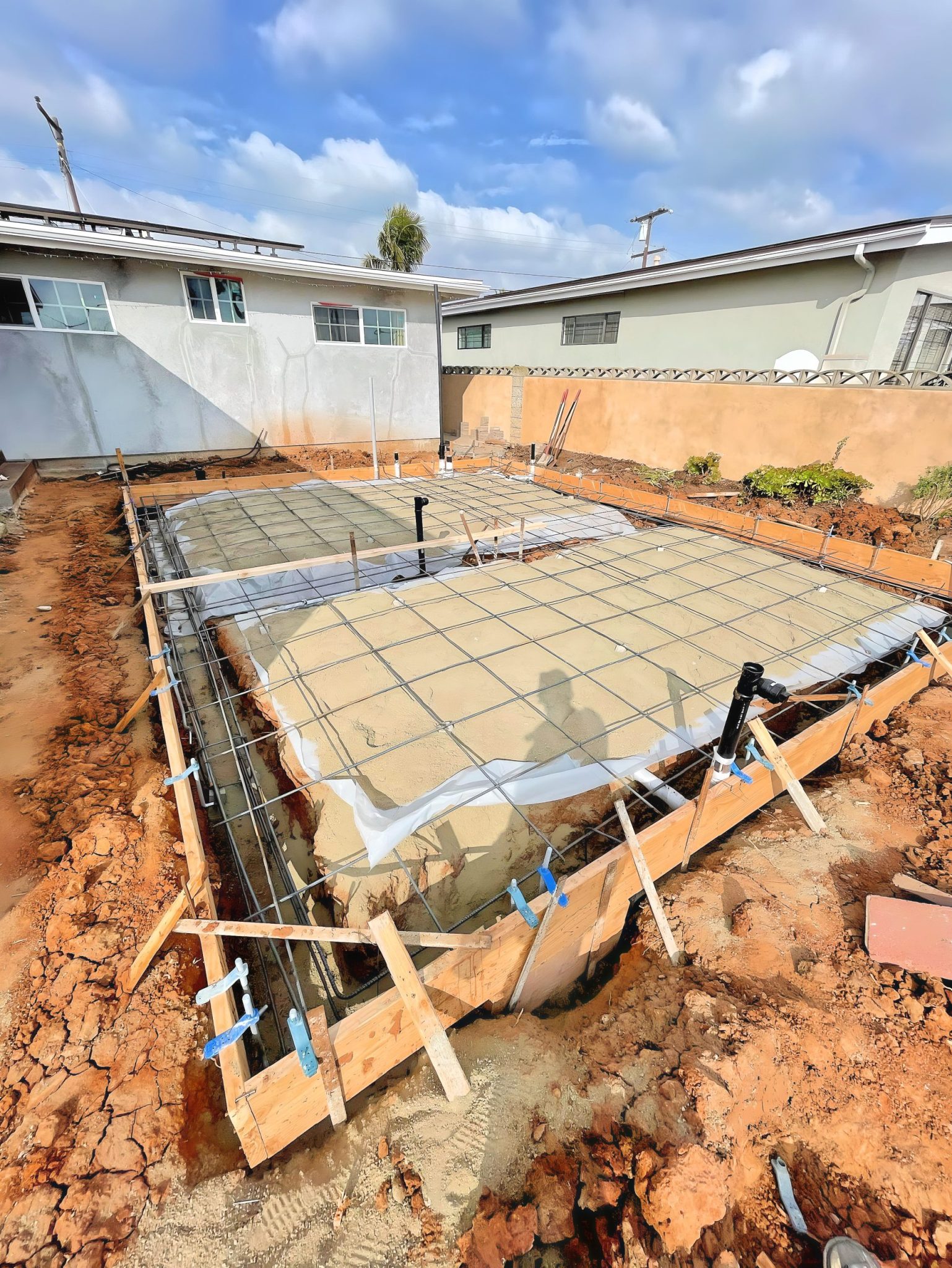
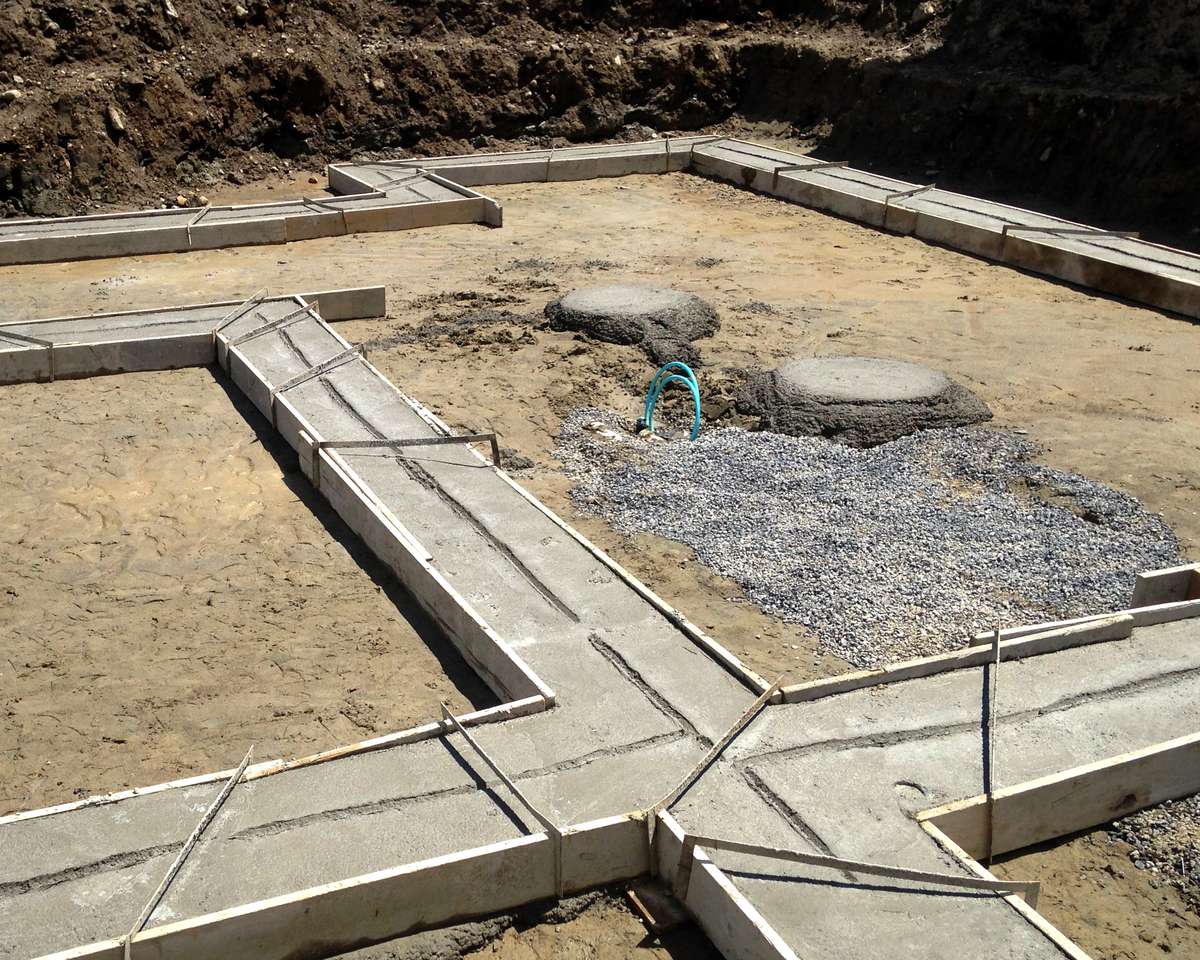
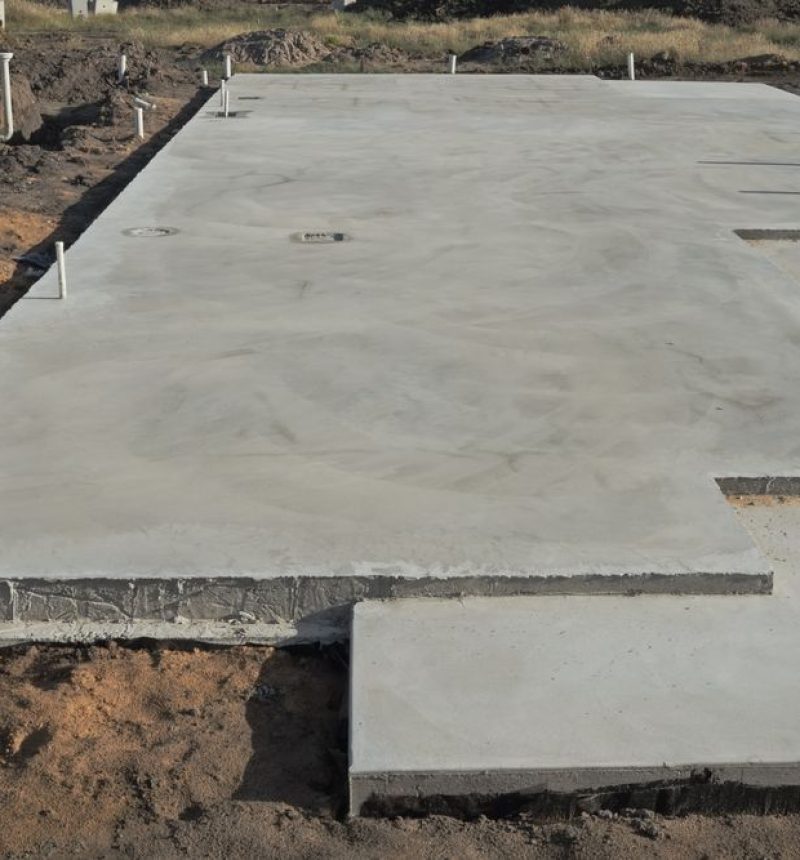
By executing a monolithic pour- where the Grade-Beam and the overlying structural floor slab are cast simultaneously to prevent weak “cold joints”- the foundation becomes an impenetrable, rigid cage. Prior to the pour, the subgrade must be heavily pre-saturated to a depth of 18 inches, and a minimum 10-mil moisture barrier must be installed to prevent subterranean vapor transmission from reaching the interior living spaces.
MEE Builders orchestrates this complex heavy-machinery operation, ensuring the entire assembly is laser-leveled and flawlessly tied into the continuous load path of the vertical framing above.
Shear Walls vs. Moment Frames
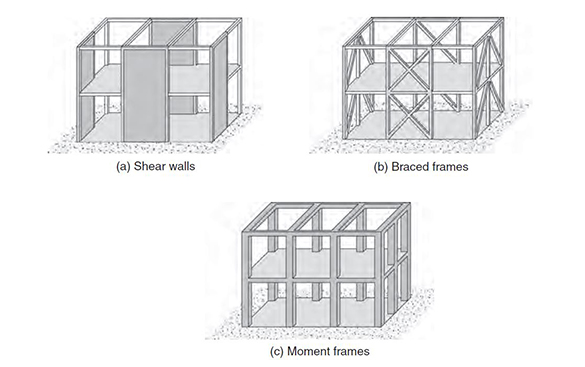
To handle these immense lateral forces, structural engineers rely on either shear walls or moment-resisting frames. Traditional construction heavily utilizes shear walls—sections of framing densely clad in structural-grade plywood or oriented strand board (OSB) and heavily nailed to resist racking forces.
These shear walls are physically tied into the foundation using heavy-duty rod and cable hold-down anchoring systems, which transfer the massive uplift forces directly into the concrete below. Maximum rod elongation under load combinations must not exceed 1/8 inch per floor.
However, luxury custom homes frequently demand expansive, open-concept layouts and massive walls of continuous glass that leave no room for solid shear walls. To achieve these vast clear spans, MEE Builders integrates structural steel moment frames. These rigid steel frames utilize highly ductile, welded connections that allow the building to absorb and dissipate seismic energy without failing. The integration of steel beams directly into the residential timber framing requires absolute precision, demanding exact laser-alignment before the exterior envelope is sealed.
Maximizing Buildable Area: San Diego FAR And Setback Calculations
Once the foundation mechanics are secured, the physical scale and footprint of a custom home are entirely dictated by the City of San Diego’s rigid zoning matrices. A true luxury builder must maximize the allowable buildable area without violating strict municipal caps
Calculating the Floor Area Ratio (FAR)
A property owner cannot simply build a house that covers their entire parcel of land. The structure’s scale is governed by the Floor Area Ratio (FAR). The FAR is a measure of a building’s size relative to the total square footage of the land on which it is located.
For custom homes located in highly desirable Single-Family Residential zones (such as RS-1-2 through RS-1-7), the maximum permitted FAR is strictly tabulated based on the exact lot area.27 The calculation strictly defines what can be built.
Lot Area (Square Feet) | Maximum Permitted Floor Area Ratio (FAR) | Maximum Buildable Gross Floor Area (Est.) |
3,000 and less | 0.70 | 2,100 sq. ft. |
4,001 – 5,000 (e.g., standard RS-1-7) | 0.60 | 3,000 sq. ft. |
7,001 – 8,000 | 0.57 | 4,560 sq. ft. |
9,001 – 10,000 | 0.55 | 5,500 sq. ft. |
14,001 – 15,000 | 0.50 | 7,500 sq. ft. |
19,001 and greater | 0.45 | 8,550+ sq. ft. |
Data derived from San Diego Municipal Code Table 131-04J regarding RS-1-2 through RS-1-7 Zones.27 Calculations represent base maximums prior to specific steep-hillside penalties or garage exemptions.28 |
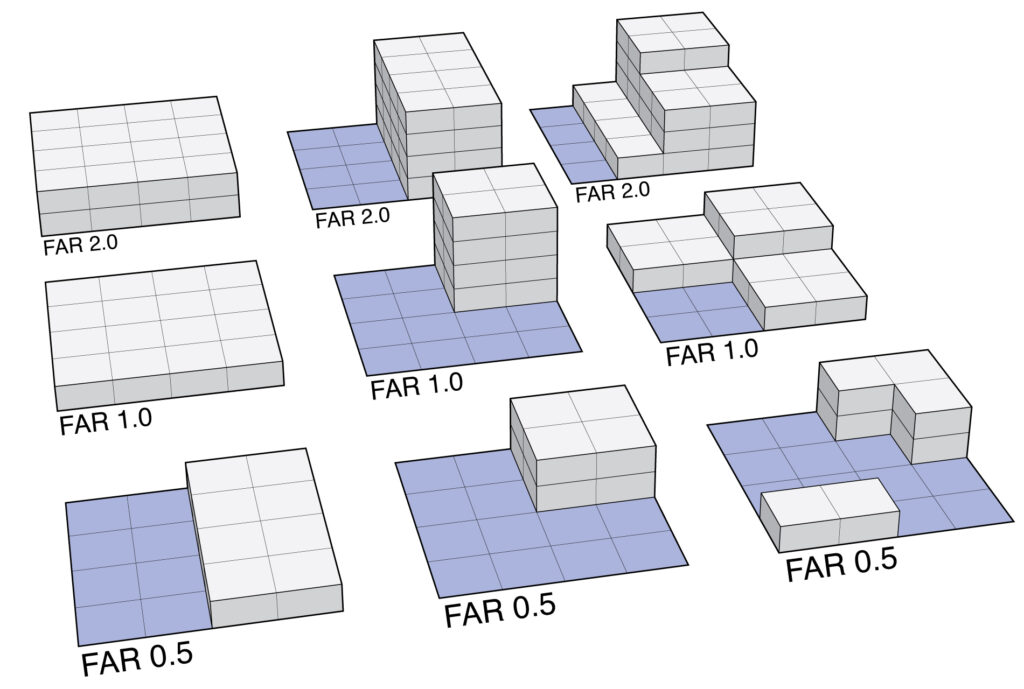
In an RS-1-7 zone, the minimum lot size is 5,000 square feet.28 According to San Diego Municipal Code Table 131-04J, a lot measuring between 4,001 and 5,000 square feet is granted a maximum FAR of 0.60.
This means the total gross floor area of the custom home across all stories cannot exceed 3,000 square feet (5,000 sq ft × 0.60). However, accurately calculating the gross floor area requires technical fluency.
Certain elements, such as up to 400 square feet of garage area in specific RS zones, can be legally excluded from the calculation, allowing for a slightly larger habitable footprint.Furthermore, if the lot contains more than 50 percent steep hillsides, the FAR calculation is severely penalized, based only on the flat portion of the site plus a mere 25 percent of the remaining sloped area.
Managing Building Setbacks and Angled Planes
In tandem with the FAR, the physical placement of the home is constrained by the Building Setback. A Building Setback is the minimum required distance between the property line and the exterior walls of the structure, designed to ensure adequate light, air, privacy, and fire separation between neighboring estates
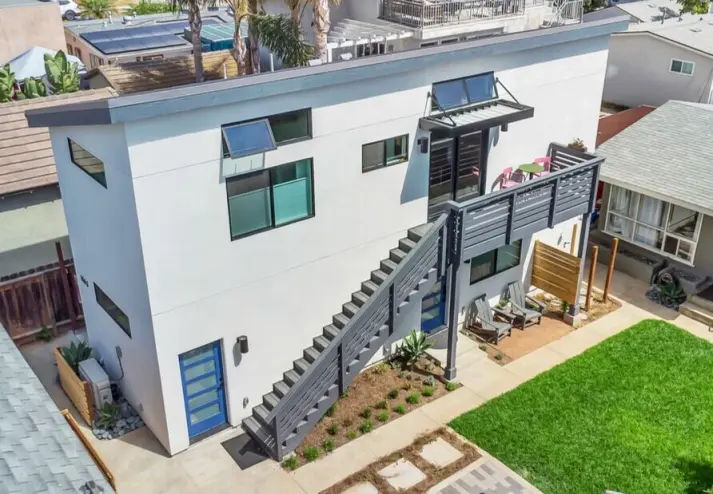
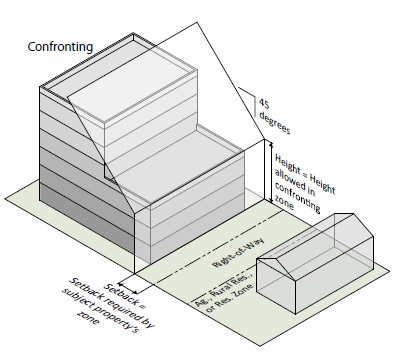
In an RS-1-7 zone, standard front setbacks typically demand a minimum of 15 feet from the property line, with specific percentage-based calculations determining the interior side and rear yard setbacks.Beyond the 2D footprint, San Diego enforces a 3D volumetric restriction known as the “angled building envelope plane”.
While a structure in an RS-1-7 zone might possess a maximum height limit of 30 feet, the exterior walls can only rise vertically to 24 feet at the side yard setback line.
Above 24 feet, the architecture must angle inward at a 45-degree pitch. This zoning mandate intentionally restricts massive, block-like structures from crowding property lines and forces architects to utilize pitched roofs or stepped-back second stories.

2026 Title 24 Compliance: Engineering The Electric-Ready Home
A complete ground-up build requires completely sealing and engineering the exterior shell to meet the stringent 2026 California Title 24 Energy Code mandates. The envelope consists of the roof assembly, exterior walls, insulated floors, and all doors and windows. The 2026 code is unapologetically aggressive in its push to decarbonize residential buildings, forcing the long-term phasing out of natural gas infrastructure to reduce greenhouse gas emissions
Advanced Fenestration and Continuous Insulation
Replacing standard glazing with modern fenestration products requires strict adherence to precise thermal performance metrics. Depending on the specific San Diego climate zone (such as the milder Climate Zone 7 along the coast or the harsher Climate Zone 10 inland), the new window assemblies must meet rigorous maximum U-factor ratings, which measure the exact rate of heat loss. The code dictates a highly efficient maximum U-factor of 0.30 or lower, paired with specialized low Solar Heat Gain Coefficients (SHGC) to prevent the harsh Southern California sun from turning a living room into a greenhouse.
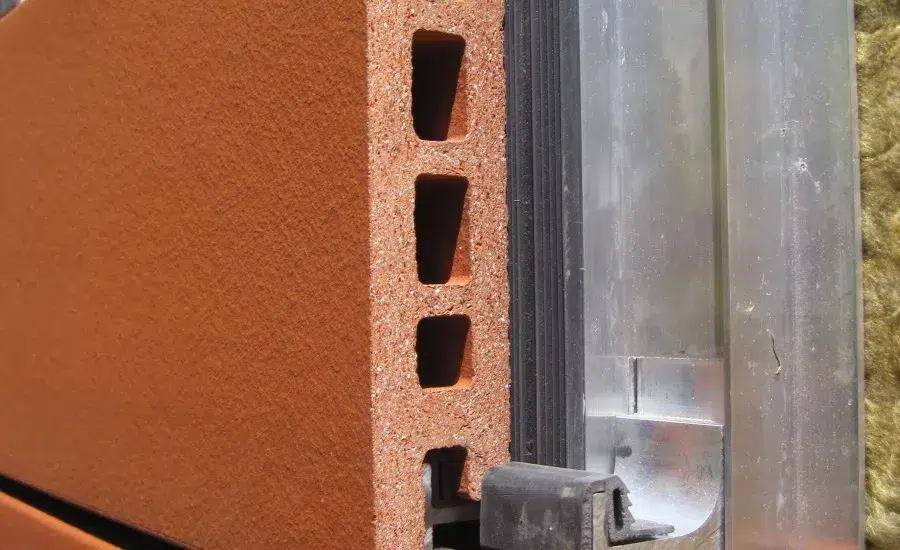
To achieve compliance, achieving true thermal efficiency requires going beyond standard fiberglass cavity batts by installing an additional layer of rigid insulation directly on the exterior of the wood framing. This advanced technique completely breaks the “thermal bridge” created by the wooden studs, drastically reducing the home’s overall heating and cooling loads and allowing the project to pass the mandatory HERS (Home Energy Rating System) diagnostic blower-door tests required for final sign-off.

The 2026 Electric-Ready Mandate
The most disruptive element of the 2026 Title 24 code for high-end builds is the mandatory “electric-ready” requirement. Even if a homeowner insists on keeping a professional-grade fossil-fuel range, the new construction must legally include robust electrical infrastructure to support future electric appliance installation. The kitchen must be hardwired with a dedicated 240-volt, 50-amp circuit, utilizing heavy-gauge copper wiring, terminating at a receptacle directly behind the cooktop location to support high-efficiency induction cooking.
To safely support these massive concurrent loads, along with the installation of high-efficiency heat pump space heaters, heat pump water heaters, and Level 2 electric vehicle (EV) chargers, MEE Builders routinely coordinates with the utility provider to engineer the property’s main service with a robust 400-amp electrical panel system. The home is wired with entirely new, heavy-gauge copper home runs throughout the wall cavities, ensuring the estate possesses the electrical bandwidth required for modern luxury living.
Behind The Walls: PEX-A Plumbing And Advanced Electrical Integration
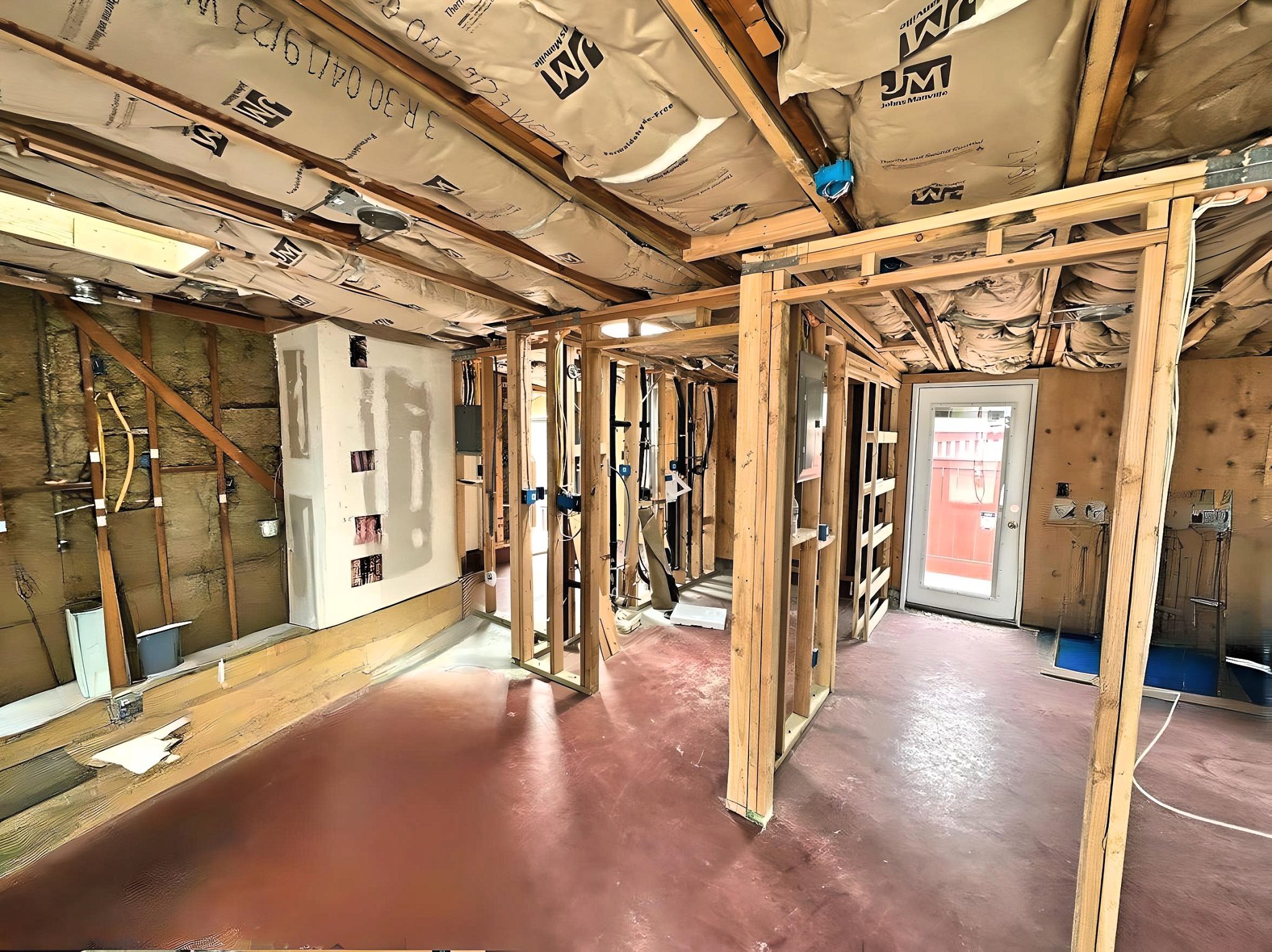
The final stages of a ground-up custom build rely heavily on the precise sequencing of mechanical, electrical, and plumbing (MEP) contractors before the drywall is hung.
The plumbing infrastructure requires laying out highly durable cross-linked polyethylene (PEX-A) supply manifolds that resist the hard mineral content of municipal water and installing heavy-duty ABS piping for the main waste drops. The electrical routing must weave through the structural steel framing without compromising the integrity of the beams, and bring ARC Fault Circuit Interrupters (AFCIs) to every bedroom and living space, as mandated by CEC 210.12.23
Only a builder operating with total oversight can flawlessly sequence these trades. If the HVAC ductwork conflicts with the structural load path of a Parallam beam, the resulting change order can stall a project for weeks. By bringing deep civil engineering and project management expertise to the table from the outset of the design, MEE Builders ensures that the initial blueprints are not only visually compelling but also structurally viable and immediately executable in the field.
2026 WUI Fire Safety: Implementing Zone 0 Ember-Resistant Buffers
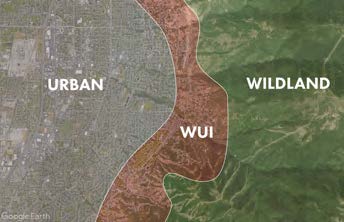
Constructing a luxury home in Southern California requires aggressive defensive engineering against the persistent threat of wildfires. The 2026 updates to the California Fire Code and the Wildland-Urban Interface (WUI) regulations represent the most stringent fire safety mandates in the nation, applying heavily to structures built within San Diego’s designated Very High Fire Hazard Severity Zones.
Implementing the Zone 0 Ember-Resistant Buffer
Effective February 2026, all new structures built in these severity zones must comply with state-mandated “Zone Zero” defensible space requirements. Research from devastating blazes indicates that homes do not typically ignite from the direct wall of flame, but rather from wind-driven embers that travel miles ahead of the fire front, lodging in combustible materials directly against the house.
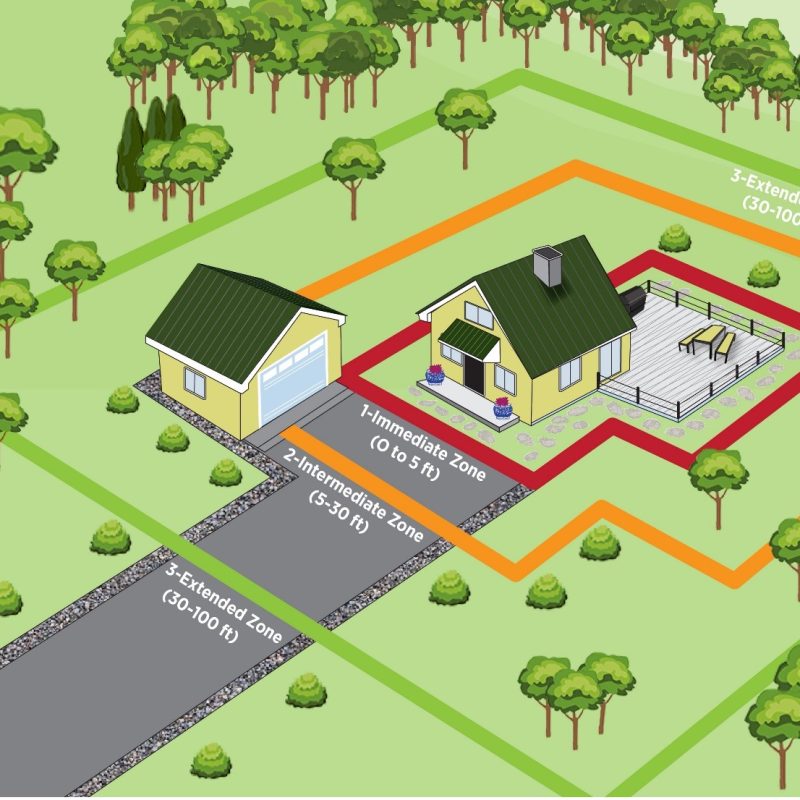
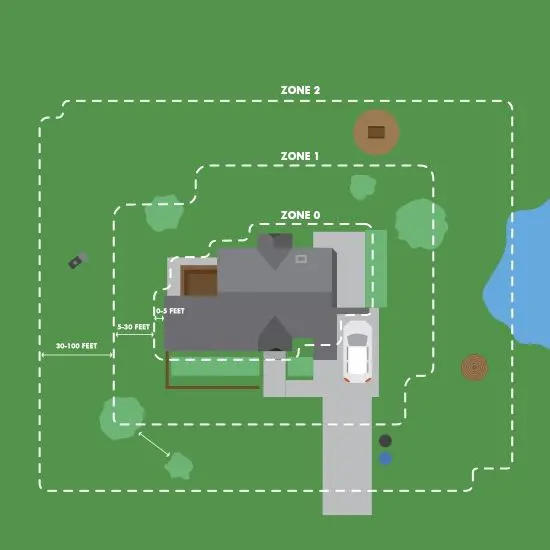
Zone 0, legally defined as the “ember-resistant zone,” extends exactly 5 feet outward from the perimeter of the home’s foundation, encompassing attached decks, stairways, and covered porches. Within this 5-foot perimeter, the building code strictly prohibits the use of combustible landscaping materials. Traditional bark mulch, dry vegetation, and wood fencing directly attached to the structure are strictly outlawed.
To satisfy the Zone 0 mandate during the final landscape and hardscape phase, MEE Builders engineers noncombustible perimeters utilizing high-end pavers, poured concrete, decorative gravel, and bare soil.This ensures the property passes the rigorous Fire Marshal inspections required to obtain the ultimate Certificate of Occupancy, effectively hardening the home against ember intrusion while maintaining a premium aesthetic.
Advanced Cladding: HardiePlank Siding and WUI Compliance
The exterior walls of a custom home in a WUI zone must serve as impenetrable armor. According to Chapter 7A of the California Building Code, exterior wall assemblies must be constructed from noncombustible or highly ignition-resistant materials capable of withstanding a 10-minute direct flame exposure under worst-case weather conditions.
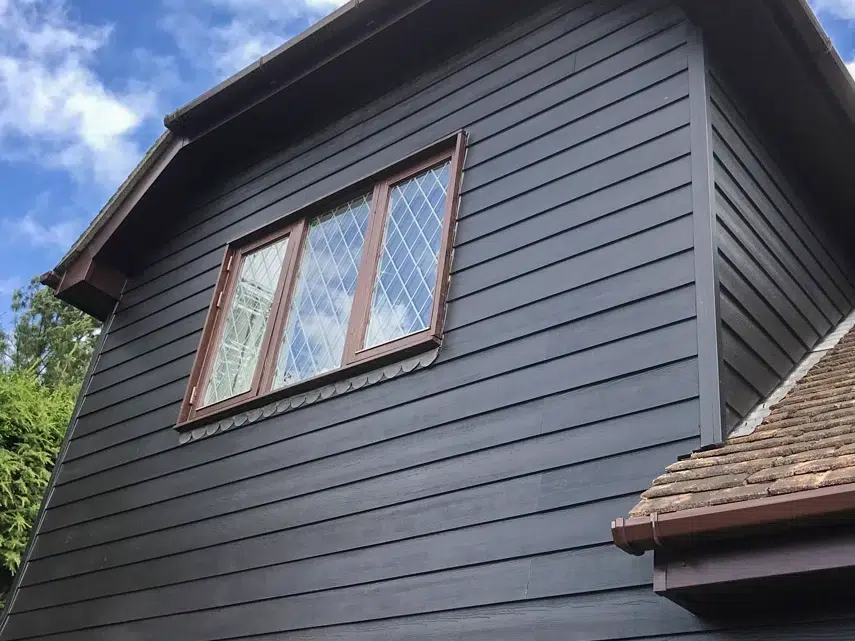
Standard untreated wood siding and vinyl cladding are highly vulnerable: wood acts as a direct fuel, while vinyl rapidly melts, exposing the interior stud cavities to fire. To guarantee compliance and absolute structural safety, premium builds specify the installation of HardiePlank Siding.
HardiePlank is a single-faced, heavy-duty siding manufactured from a highly engineered cellulose fiber-reinforced cement matrix. Through rigorous independent laboratory testing, it has achieved an ASTM E136 classification as a strictly noncombustible building material. Furthermore, when subjected to the ASTM E84 surface burning characteristics test, HardiePlank registers a flawless Flame Spread Index (FSI) of 0 and a Smoke Developed Index (SDI) of less than 5.
By completely enveloping the custom home in fiber-cement HardiePlank—and pairing it with dual-glazed tempered windows and noncombustible soffits to protect the eaves 44—MEE Builders ensures the exterior facade satisfies the exact specifications published in the Office of the State Fire Marshal’s (OSFM) Building Materials Listing Program. The material will not ignite under direct flame impingement, effectively buying critical time for emergency responders and ensuring the multimillion-dollar investment survives a WUI conflagration.

San Diego Custom Home Building FAQ
How much does a ground-up custom home cost in San Diego?
The average cost is $350 to $600 per square foot for a ground-up luxury build in San Diego. Prices fluctuate heavily based on the exact topographical challenges of your lot and the required municipal assessments under Information Bulletin 501. Building on flat terrain is generally more predictable, but securing a sloped canyon lot means paying for deep geotechnical engineering to safely bypass unstable surface dirt. MEE Builders controls these capital variables by front-loading the site assessment, locking down exact Development Impact Fees (DIF) before heavy earth-moving equipment ever arrives.
How long does a typical ground-up custom home project take?
It takes 14 to 18 months from the initial site assessment to the issuance of the final Certificate of Occupancy. Permitting timelines are strictly dictated by the San Diego Development Services Department (DSD) and the specific complexity of your lot. Properties triggering a Coastal Development Permit (CDP) or requiring a localized Water Pollution Control Plan (WPCP) will inherently face longer administrative cycles. We systematically shave weeks off this process using our Build-Ready Architecture model, which eliminates the redesign loops that plague disconnected design-build firms.
How do you handle permits and inspections with the San Diego Development Services Department?
MEE Builders handles 100% of the municipal permitting and inspection scheduling in-house. Navigating the DSD requires profound fluency in the California Building Standards Code and rigid local zoning matrices. We operate as the single, continuous point of authority, submitting the mandatory Information Bulletin 515 soil reports and negotiating directly with city planners on your behalf. Direct owner oversight ensures that elements like structural steel moment frames pass their lateral load checks flawlessly, completely avoiding the bureaucratic friction of stop-work orders.
How do local San Diego soil conditions affect a custom home foundation?
Local expansive soils aggressively shift and fracture standard unreinforced concrete slabs. Many inland San Diego communities sit directly atop Diablo and Las Flores series Vertisols, which are heavy clays that absorb winter rain and violently shrink during the summer heat. This constant kinetic stress generates immense upward hydrostatic pressure beneath the house. To neutralize this geotechnical distress, we engineer monolithic pours over heavily pre-saturated subgrades and install 10-mil moisture barriers to completely isolate the luxury living space from the earth below.
What are the hidden dangers of ignoring Section 1208.3 compliance?
Ignoring this mandate guarantees an immediate “red tag” rejection during the initial Development Services Department plan check. The 2026 California Building Code updates strictly mandate a minimum of 190 square feet of total habitable space for any new dwelling unit constructed in the city. If your drafted Accessory Dwelling Unit (ADU) or detached guest suite falls short of this exact mathematical threshold, the physical build halts. We mathematically pre-vet every master plan against this code, ensuring the gross floor area calculations include the required heating elements while legally excluding unfinished basements.
Can you perform a custom build even if I have a steep hillside lot?
Yes, we specialize in engineering custom estates on severe slopes exceeding a 25 percent gradient. Constructing a residence on steep inland hillsides or sensitive coastal bluffs requires strict adherence to Environmentally Sensitive Lands (ESL) regulations and mandatory 40-foot slope setbacks. Standard shallow foundations will fail here due to the threat of localized landslides and soil erosion. We secure these extreme properties by drilling heavy-duty caissons down to solid bedrock, actively satisfying the “40 feet to daylight” requirement to keep the structure permanently stabilized.
What is the difference between a shallow slab and a Grade-Beam foundation?
A shallow slab floats on the surface dirt, while a Grade-Beam foundation anchors deep into unyielding bedrock. Standard slab-on-grade foundations are highly susceptible to seasonal movement, edge lift, and frost heave, making them a massive liability on sloped or clay-heavy San Diego lots. Conversely, a Grade-Beam is a massive, heavily reinforced concrete trench that spans horizontally across deep-drilled concrete caissons. This structural collar evenly distributes the immense dead weight of the home, rigidly resisting seismic activity and uplift forces.
What are the specific San Diego codes for fire safety in new construction?
The 2026 updates mandate a strict 5-foot Zone 0 ember-resistant buffer around the entire foundation perimeter. Because Southern California faces persistent wildfire threats, properties built in Very High Fire Hazard Severity Zones cannot legally use traditional bark mulch or combustible wood fencing attached to the house. We engineer these Zone 0 perimeters using noncombustible hardscaping like poured concrete and decorative gravel. Furthermore, we wrap the entire exterior envelope in fiber-cement HardiePlank Siding, which holds a flawless Flame Spread Index (FSI) of 0 to stop wind-driven embers from penetrating the stud cavities.