
San Diego Outdoor Remodeling for Decks, Patio Covers & Hardscapes
Engineered Outdoor Living Solutions for San Diego Homes
An outdoor living San Diego project requires synthesizing structural exterior engineering with precise municipal zoning compliance. MEE Builders executes code-compliant structural hardscaping, deep foundation footings, and custom patio covers, utilizing advanced drainage mitigation to transform raw exterior footprints into fully legal, highly appraised luxury estate assets.
- Fully Licensed & Insured: CSLB #1046249
- 10 Years of Excellence: Serving the San Diego, CA
- 100+ Verified Reviews Google, Yelp, Houzz
Soil, Slope and Site Engineering for San Diego Outdoor Construction
Executing structural exterior modifications across San Diego County requires a profound understanding of the region’s diverse microclimates, specific zoning matrices, and dynamic soil mechanics. Operating from a centralized headquarters at 8400 Miramar Rd suite 200a, MEE Builders is positioned exactly 5 minutes from heavy material suppliers and the Miramar Road Design Centers, and a rapid 10-minute transit down the I-15 corridor to the San Diego Development Services Department (DSD) in Mission Valley. This strategic logistical hub allows engineering and framing crews to deploy seamlessly, maintaining absolute site control over complex topographical builds across the entire 921XX zip code grid.
MEE Builders
Deck and Hardscape Footing Engineering for Expansive Clay Lots
A masterfully engineered outdoor space must harmonize physically with its local subterranean conditions. In inland communities such as Poway, Scripps Ranch, and North Park, the earth is composed primarily of expansive clay Vertisols, specifically the Diablo and Las Flores soil series. These highly dynamic soils contain concentrations of smectitic minerals that expand during winter moisture events and contract during dry summer months, generating continuous kinetic movement.
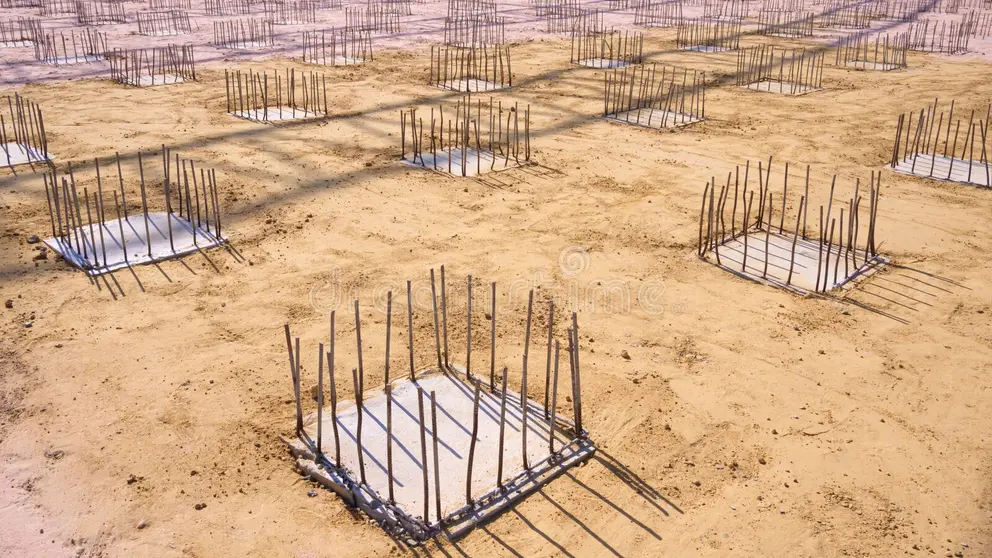
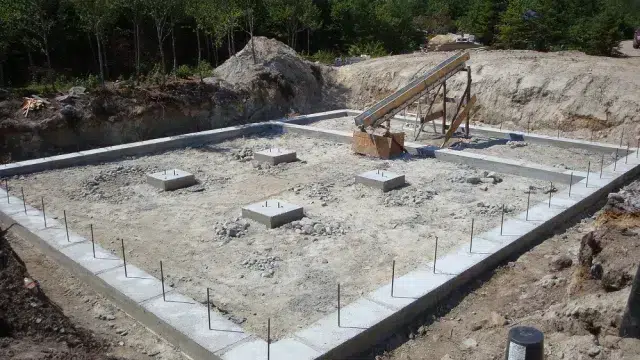
To guarantee that poured concrete and structural hardscaping remain pristine over a multi-generational design life, structural engineers implement advanced stabilization protocols. MEE Builders specifies heavily reinforced 2,500 psi concrete footings tied with #4 continuous steel rebar. Furthermore, the subgrade is heavily pre-saturated to a depth of 18 inches, and heavy-duty 10-mil vapor barriers are installed to completely isolate the new structural slab from the dynamic earth below, ensuring a flawless foundation for luxury finishes.
Marine-Air Protection for San Diego Patio Covers, Deck Frames and Fasteners
Properties situated west of the I-5 corridor—spanning from the marine terraces of Point Loma up through the coastal bluffs of La Jolla and Del Mar—require a specialized material science approach to manage airborne marine moisture, ambient humidity, and shifting sandy loam. Constructing a heavy timber deck or a massive retaining wall in these coastal zones demands exceptional durability.
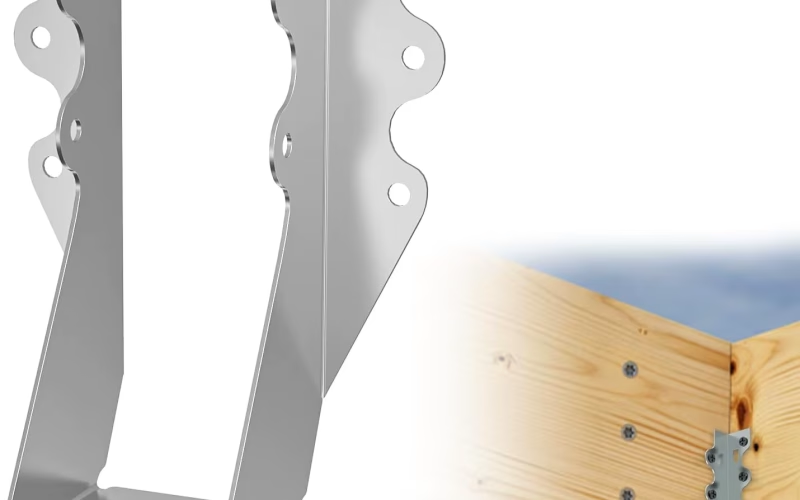
Construction utilizes premium pressure-treated, ACQ-rated (Alkaline Copper Quaternary) lumber for all structural posts, joists, and ledger boards. This advanced chemical treatment deeply penetrates the timber, rendering it highly resistant to the coastal atmosphere and ensuring incredible longevity. Additionally, all joist hangers, structural bolts, and mechanical fasteners are specified as heavy-duty stainless steel or hot-dipped galvanized metal to proactively prevent saltwater corrosion, maintaining the structural brilliance of coastal San Diego estates.
Topographic Design Strategies for Outdoor Construction on Sloped Lots
San Diego’s natural landscape is beautifully defined by steep inland canyons, rolling hillsides, and pristine coastal bluffs. When expanding an outdoor living area onto a slope with a gradient exceeding 25 percent, flat-lot construction methods are upgraded to highly specialized hillside engineering. Building a cantilevered deck or a poured concrete patio on these terrains introduces an excellent opportunity to implement rigorous, high-end site engineering protocols.
MEE Builders partners with licensed geotechnical engineers to secure comprehensive soil reports under San Diego Information Bulletin 515, mapping the underlying bedrock and calculating exact slope stability metrics. This proactive engineering identifies the precise depth required for deep foundation systems, guaranteeing absolute adherence to the city’s highest life-safety codes and ensuring the outdoor structure stands as a permanent architectural achievement.
Licensed Structural Outdoor Construction and Permit Compliance in San Diego
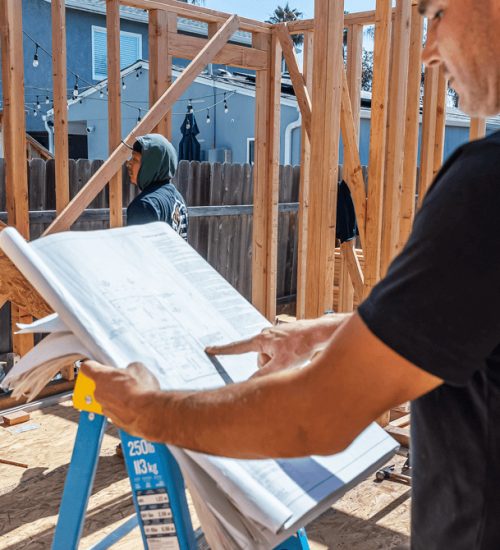
To maximize the potential of an exterior remodel, property owners must differentiate between cosmetic landscaping and heavy structural engineering. Constructing massive outdoor kitchens, attaching heavy timber pergolas to rooflines, or pouring extensive concrete retaining walls requires advanced load-path calculations and specific legal licensing to ensure the resulting space adds officially recognized value to the estate.
Class B General Contractor vs. Landscaper for Load-Bearing Backyard Work
The California Contractors State License Board (CSLB) strictly regulates the scope of work permitted for different classifications. A C-27 Landscaping Contractor excels at horticultural design but is legally restricted from executing major structural changes to a primary residence. Modifying a home’s exterior load-bearing stucco wall to safely attach a heavy-duty patio cover ledger board requires precise structural engineering to maintain the building’s continuous load path and seismic shear strength.
MEE Builders operates under strict CSLB #1046249 Class “B” General Building Contractor compliance. Functioning as Structural GCs, the firm provides absolute legal and structural authority for exterior construction. This includes calculating exact deflection tolerances for Laminated Veneer Lumber (LVL) beams and ensuring every roof tie-in and foundation footing perfectly meets the rigorous standards of the 2026 California Residential Code (CRC).

Permit-Ready Outdoor Construction That Protects Appraisal and Resale Value
The ultimate measure of a successful build is its recognition during a high-value real estate transaction. MEE Builders engineers every outdoor living space from its absolute inception to be a fully permitted, heavily appraised asset that seamlessly elevates the property’s market value. By meticulously verifying lot coverage limits, executing precise as-built CAD blueprints, and navigating the San Diego Development Services Department’s (DSD) permitting portals, expansive exterior square footage is officially translated into high-yield real estate equity.
Zoning, FAR and Setback Rules for San Diego Patio Covers and Outdoor Structures
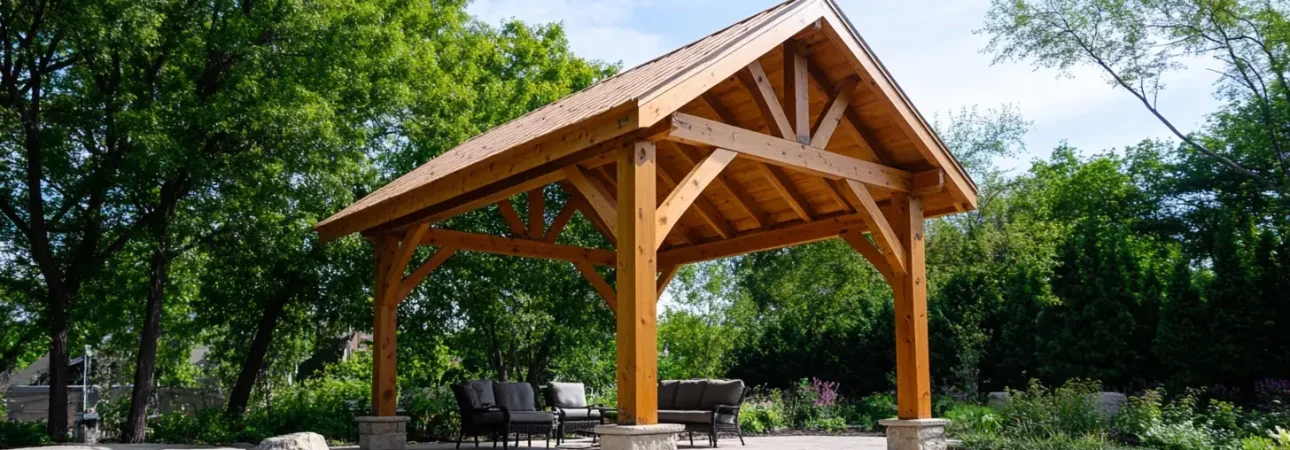
The scale, mass, and physical placement of any exterior structure in San Diego are explicitly governed by municipal zoning laws. The architectural design phase treats these municipal codes as an opportunity for strategic optimization, using exact mathematical parameters to extract the absolute highest legal yield and visual volume from the residential parcel.
Non-Habitable Accessory Structure Rules for Outdoor Living Spaces
Under San Diego Municipal Code §141.0302, which regulates the density of residential lots, specific statutory allowances are beautifully carved out for exterior improvements. The code explicitly states that guest quarters and non-habitable accessory structures are permitted in addition to primary dwellings, provided they comply with the underlying base zone regulations.
A custom structural patio cover, a freestanding timber pavilion, or a luxury masonry outdoor kitchen falls squarely under this legal jurisdiction. While these structures are optimized for entertaining and cannot contain a full interior kitchen, features such as a bar sink and a miniature refrigerator are legally permitted, allowing for a fully functional gourmet outdoor experience.
FAR Exemptions That Can Expand Covered Outdoor Space
Integrating massive structural hardscaping requires calculating the property’s exact Floor Area Ratio (FAR). The FAR is the mathematical ratio of a building’s total gross floor area to the total square footage of the lot.
Certain architectural elements can be strategically excluded from the FAR calculation if engineered correctly. Unenclosed roofed entryways or luxurious porches with at least two elevations that are 40 percent open frequently do not count against the maximum coverage limits. By isolating these exact mathematical allowances, the architectural design is expertly manipulated to provide sprawling covered outdoor living spaces without triggering municipal
Setbacks and Angled Building Envelope Limits for Patio Covers
In tandem with FAR, the physical placement of the structure is beautifully optimized within the Building Setback boundaries—the legally required distance ensuring light, air, and privacy between neighboring estates.
San Diego also utilizes a 3D volumetric guideline known as the “angled building envelope plane.” While an accessory structure might possess a maximum overall height limit of 12 to 15 feet, the architecture must conform to specific angles as it approaches the side yard setback line. Advanced 3D CAD software is utilized to build a precise digital model of the building envelope, ensuring that pitched patio roofs and timber pavilions utilize every available inch of vertical volume while maintaining perfect, beautiful compliance with the city’s angled restrictions.
Coastal, Hillside and ESL Constraints for San Diego Deck and Patio Cover Projects
For properties located on the rim of San Diego’s gorgeous inland canyons or along the immediate coast, exterior construction requires seamless integration with Environmentally Sensitive Lands (ESL) regulations. According to SDMC §143.0101, development is designed to protect the overall quality of natural resources, retain biodiversity, and preserve the area’s topographic character.
Coastal Bluff Setbacks for Decks and Outdoor Structures
When engineering a load-bearing deck or a structural concrete patio near a coastal bluff, the design complies with a minimum 40-foot setback from the bluff edge. This guideline exists to ensure the massive weight of the new structure rests on completely stable ground, ensuring incredible longevity and preserving geologic stability.
To maximize usable space, accessory structures and landscape features that are strictly at grade—such as beautiful unenclosed patios or low-profile decks less than 3 feet above grade—may be placed much closer, up to 5 feet from the coastal bluff edge, allowing homeowners to capture breathtaking ocean views while remaining perfectly code-compliant.
Steep Hillside Separation Rules for Canyon-Edge Construction
For inland estates situated on steep hillsides, the ESL code outlines a 20-foot separation distance from the top of the slope to any new development to easily qualify for permit exemptions. This ensures the structural footings rest on premium, stable earth.
MEE Builders navigates these spatial parameters by executing highly precise topographic surveys before the design phase begins. The exact setback lines are mathematically mapped, ensuring a custom deck maximizes the canyon view and architectural flow without ever encroaching on environmentally sensitive slope zones.

Protecting Natural Resource Areas During Outdoor Construction
San Diego’s natural environment is home to diverse plant and animal species. Premium development maintains at least a 100-foot separation distance from sensitive biological resources. If sensitive biological resources are located outside the allowable development area on a private parcel, they are gracefully left in a natural state. The municipal code frequently requires a covenant of easement to be recorded, identifying permitted passive activities and ensuring the surrounding habitat remains a permanently undisturbed backdrop to your luxury estate.
Patio Cover and Pergola Design for Long-Span Outdoor Living in San Diego
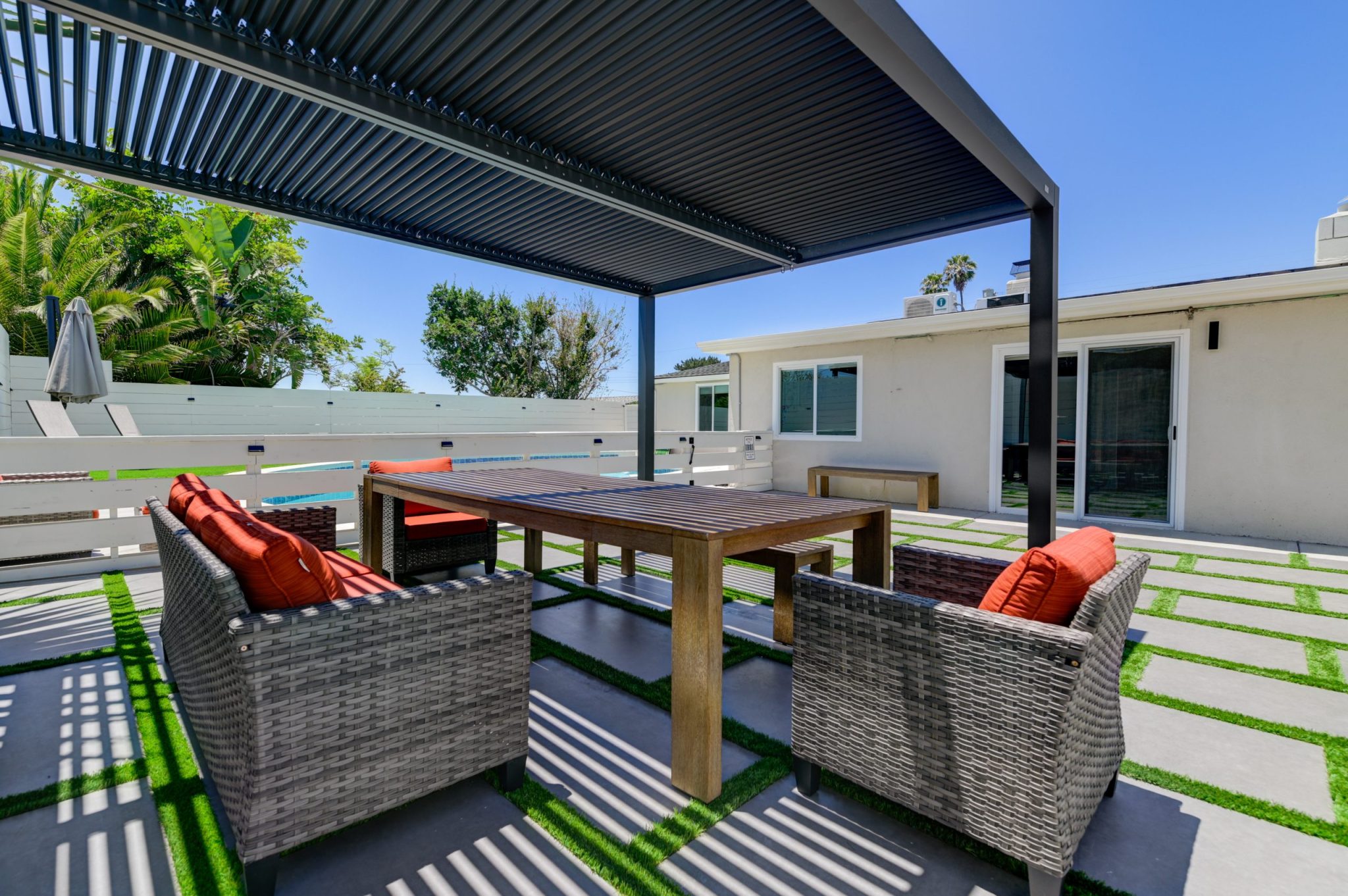
A custom patio cover transforms a sun-drenched concrete slab into a shaded, multi-season architectural sanctuary. Erecting a heavy timber overhang that successfully spans 20 feet across an exterior living space requires precise, mathematically validated load path calculations to achieve an enduring, monumental aesthetic.
When the 300-Square-Foot Patio Cover Exemption Stops Applying
The City of San Diego beautifully regulates the construction of patio covers through Information Bulletin 206 (IB-206). Patio covers are legally defined as one-story structures not exceeding 12 feet in height above grade. While a patio cover that does not exceed 300 square feet of projected roof area may be exempt from a building permit in a standard single-family zone, a formal building permit is smoothly secured if the structure exceeds this size, ensuring the expansive shade structure is officially recorded as an appraised addition to the home.
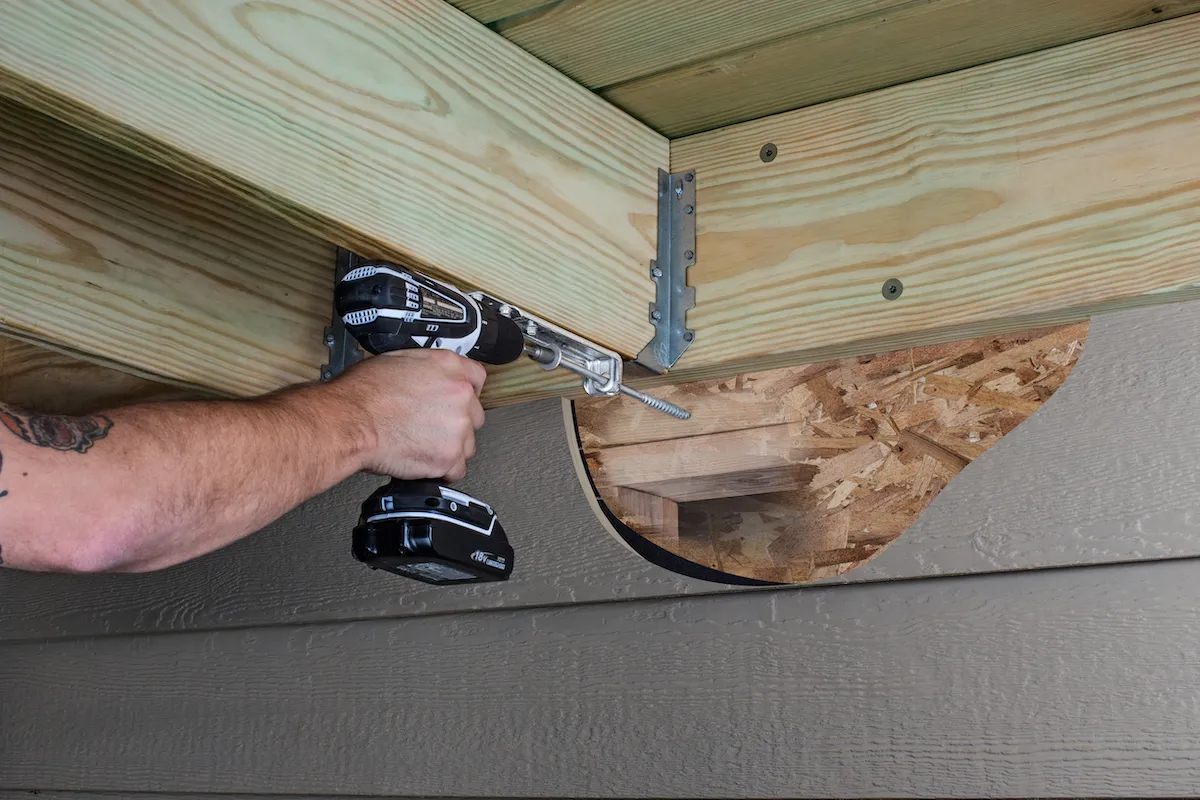
Ledger Board Attachments and Roof Tie-Ins for Attached Patio Covers
When executing an attached patio cover, the structural connection to the primary dwelling is engineered for absolute perfection. The municipal code requires the exterior architectural envelope to be surgically opened to locate the solid timber framework, rather than resting new rafters on existing fascia.
A heavy-duty structural ledger board is secured directly into the home’s vertical wall studs using 3/8-inch by 5-inch lag screws spaced at a maximum of 16 inches on center. This rigid mechanical connection seamlessly transfers the dead weight of the new roof structure safely into the home’s primary continuous load path, guaranteeing exceptional stability and longevity during high-wind events.
Footings and Post Design for Load-Bearing Shade Structures
Supporting the outward edge of a massive patio cover requires unyielding foundation footings. Under the specifications of IB-206, standard structural posts—such as 6×6 timber columns required for structures reaching 8 to 10 feet in height—are anchored to concrete footings poured with a minimum compressive strength of 2,500 psi.
If the downward point-load of a specific structural post exceeds 750 pounds, dedicated pad footings are excavated and poured deep into the subgrade to securely anchor the posts at the bottom and brace them at the top, ensuring the overhead structure remains perfectly rigid and plumb.
LVL Beams and Structural Steel for Wide-Span Patio Covers and Pavilions
To achieve massive, breathtaking clear spans beneath the patio cover without relying on visually disruptive center columns, advanced civil engineering is deployed. High-strength Laminated Veneer Lumber (LVL) beams or structural Steel I-Beams are utilized to seamlessly intercept the roof loads. LVL is manufactured by bonding multiple layers of thin wood veneers under extreme heat and pressure, creating a structural member with a vastly superior strength-to-weight ratio. These engineered components provide a perfectly flat, laser-leveled roofline capable of effortlessly supporting heavy roofing tiles and integrated modern outdoor ceiling fans.
San Diego IB-206 Requirement | Minimum Municipal Specification | MEE Builders Engineered Standard |
Concrete Footing Strength | 2,500 psi minimum compressive strength | 2,500 psi reinforced with #4 steel rebar cages |
Ledger Board Attachment | 3/8” x 5” lag screws into studs | Epoxy-sealed lag screws with integrated continuous flashing |
Structural Post Dimensions | 6×6 minimum for 8 to 10 feet high | Heavy-duty structural columns with concealed steel standoff bases |
Roof Pitch / Water Drainage | Minimum 1/4 inch per 12 inches | Precision laser-sloped for rapid runoff integration into subdrains |
Coastal Development Permit Strategy for San Diego Outdoor Construction
For luxury estates located within the breathtaking coastal boundaries of San Diego, adding a patio cover or major structural hardscaping requires a highly specific level of municipal review. Navigating this administrative process smoothly requires a deep understanding of zoning protocols and architectural precision.
Building Outdoor Structures Inside San Diego’s Coastal Zone
The Coastal Overlay Zone encompasses areas generally west of the I-5 corridor and surrounding the beautiful San Diego Bay. The construction of structural hardscaping, retaining walls, or attached patio covers in these premium districts frequently necessitates a Coastal Development Permit (CDP).
A CDP is a wonderful opportunity to present highly refined architectural plans that demonstrate the new structure will preserve public coastal views, maintain physical public access to the shoreline, and seamlessly integrate with sensitive marine ecosystems.
Public Hearing and Discretionary Review Triggers
Securing a CDP involves a discretionary review process that may include public hearings. Preparing for this requires generating exquisite architectural renderings, site plans, and visual impact analyses to legally and beautifully substantiate that the design is completely consistent with the Local Coastal Program.
MEE Builders acts as a centralized point of authority, drafting the exact site plans, managing the plan check fees, and executing the highly technical dialogue with the city planners. This centralized management ensures the CDP is secured efficiently, keeping the exterior renovation perfectly on schedule and transforming coastal properties into flawless architectural masterpieces.

Drainage, Retaining Wall and Stormwater Engineering for San Diego Hardscapes
A masterfully executed component of heavy hardscaping is the seamless management of surface and subsurface water. Rerouting the natural topography of a lot by pouring expansive concrete patios or installing large-format pavers fundamentally improves the property’s hydrology. Water is meticulously managed through site engineering, directing it smoothly away from the foundation to ensure absolute long-term structural stability.
Geotechnical Reports, Soil Pressure and Footing Requirements
Before executing heavy earthwork or constructing beautiful masonry retaining walls over three feet tall, San Diego Information Bulletin 515 utilizes a comprehensive geotechnical investigation. A licensed geologist or civil engineer evaluates the site’s unique characteristics to provide exact, custom-tailored building parameters.
The resulting Soil Report determines the exact allowable bearing pressure, lateral earth pressures, and minimum footing embedment required to perfectly support the new outdoor kitchen and retaining walls. Retaining walls are mathematically designed to support these earth pressures effortlessly, incorporating potential surcharge loads from adjacent driveways to guarantee an incredibly robust build.
Retaining Wall Drainage and Hydrostatic Pressure Control
When constructing a masonry retaining wall to carve out flat, highly usable living space from a hillside, the structure is engineered to seamlessly manage hydrostatic pressure. Water trapped behind a solid concrete wall holds significant weight; an efficient release mechanism guarantees the wall maintains its perfect, plumb alignment over decades.
Advanced drainage mitigation is implemented directly into the structural architecture. Deep trench drains are engineered, and heavy-duty perforated PVC subdrain pipes are elegantly installed. These pipes are meticulously wrapped in specialized geotextile filter fabric and backfilled with clean, crushed aggregate to ensure pristine water flow. This precision-sloped assembly captures subsurface water and rapidly channels it away from the foundation footings, discharging it safely through an approved municipal catch basin.
SWPPP and Erosion Control for Sloped-Lot Construction
During the excavation phase of a massive exterior overhaul, MEE Builders employs aggressive erosion-control measures to keep the site pristine and organized. Proactive management ensures sediment and runoff are perfectly contained, protecting San Diego’s beautiful watershed and municipal storm drain systems.
If the ground disturbance exceeds 1,000 square feet, the site utilizes municipal stormwater guidelines to implement a Minor Water Pollution Control Plan (MWPCP) via Form DS-570. Stabilized gravel construction entrances, heavy-duty perimeter silt fences, and fiber rolls are proactively deployed across graded slopes. By following local Storm Water Quality Management Plans (SWQMP), we keep the job site exceptionally clean and ensure smooth, uninterrupted construction progress.
Fire-Resistant Decking and Noncombustible Outdoor Materials for San Diego Zone 1
Constructing a heavy timber deck or a sprawling outdoor living area in San Diego’s canyon communities allows for brilliant defensive engineering against persistent wildfire threats. The region features over 900 linear miles of beautiful wildland-urban interface. Properties located within designated Very High Fire Hazard Severity Zones (VHFHSZ) are engineered to meet the highest safety codes in the nation while maintaining a spectacular aesthetic.
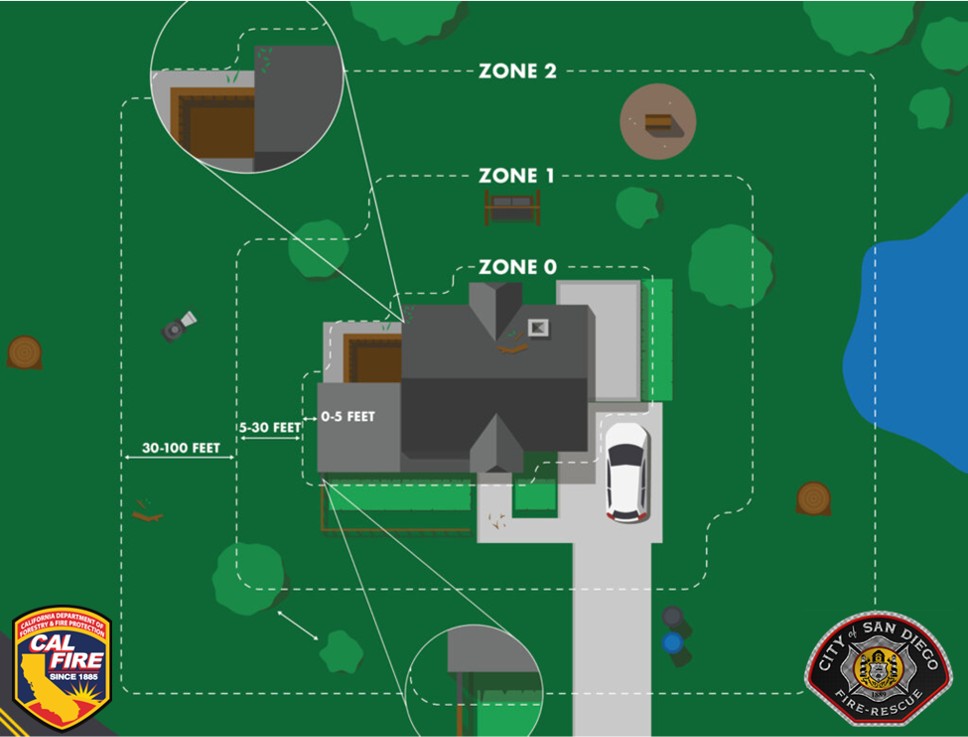
San Diego Municipal Code §142.0412 expertly governs Brush Management, utilizing 100 feet of defensible space around any habitable structure to ensure ultimate property protection. This space is divided into two distinct zones. Brush Management Zone 1 typically extends 35 feet outward from the structure towards the vegetation, encompassing the level portion of the property.
Within this highly protected 35-foot perimeter, new construction—including fences, luxury walls, and premium decks—is beautifully crafted utilizing noncombustible materials or materials that achieve a minimum one-hour fire-resistance rating, ensuring total peace of mind for the homeowner.

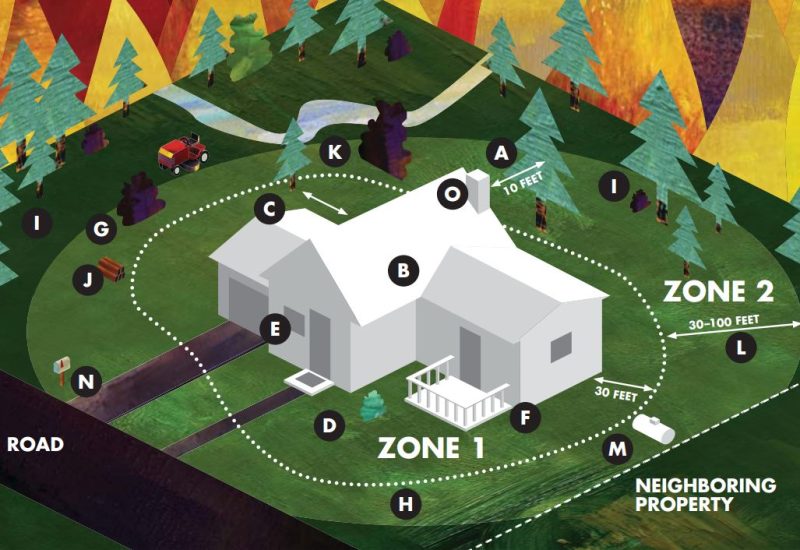
Noncombustible Decking and Fire-Resistant Assemblies for San Diego Homes
To satisfy these uncompromising fire safety mandates while elevating the luxury aesthetic of the outdoor living space, engineering utilizes advanced material science. Heavy-duty structural steel framing is implemented for deck undercarriages, providing unparalleled strength and fire resistance. Surface decking features premium, ignition-resistant composite materials that have passed rigorous Office of the State Fire Marshal (OSFM) testing.
Furthermore, the hardscaping footprint utilizes noncombustible poured concrete, decorative pavers, and elegant stone, which acts as a permanent, zero-fuel barrier against advancing wildfires. This meticulous adherence to SDMC §142.0412 ensures the property sails through Fire Marshal inspections and provides a stunning, incredibly safe outdoor sanctuary.
Cantilevered and Canyon-Edge Deck Engineering in San Diego
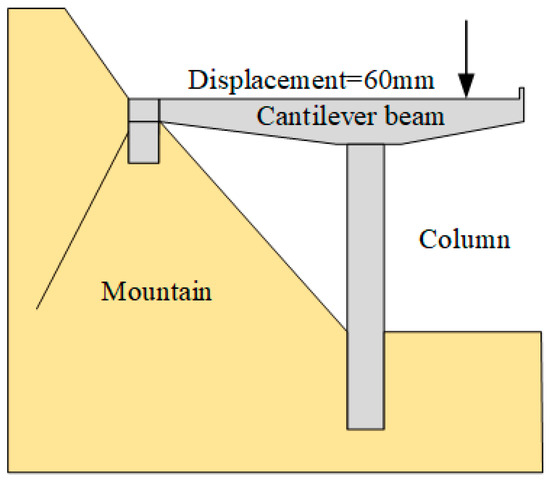
Expanding usable square footage over a steep San Diego canyon showcases uncompromising civil engineering. A cantilevered deck is a highly advanced, independent structural apparatus that effortlessly defies gravity, resists seismic forces, and provides an incredibly stable platform for luxury living.
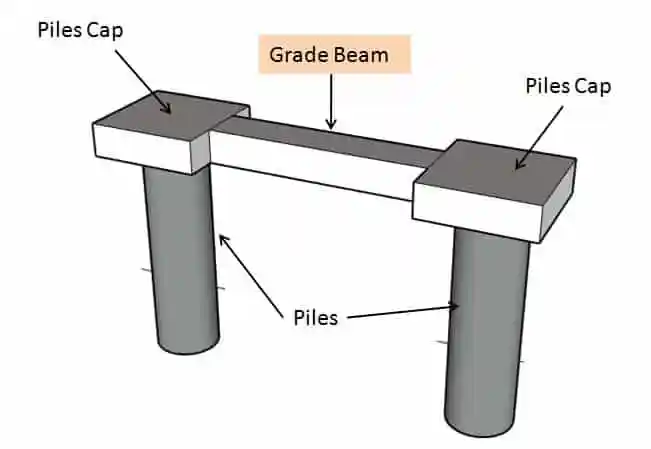
Caissons and Grade Beams for Hillside Deck Support
To anchor an outdoor living space permanently to a steep incline and ensure unyielding stability, MEE Builders bypasses standard shallow footings. Instead, heavy drilling equipment is utilized to bore deep vertical shafts—known as caissons—straight down through the topsoil until they lock directly into solid, unyielding bedrock.
In severe hillside applications, these caissons are engineered to meet the geotechnical “40 feet to daylight” requirement, ensuring the foundation extends deep enough to keep the structure permanently stabilized. These deep concrete piers are beautifully tied together horizontally using a heavily reinforced concrete Grade-Beam. This rigid structural cage distributes the immense dead weight of the deck evenly, completely eliminating the threat of slope shifting and ensuring flawless performance during seismic events.
Corrosion-Resistant Lumber and Hardware for Coastal and Canyon Exposure
The physical materials utilized to construct the deck frame are meticulously selected to thrive during constant exposure to ambient moisture. Premium pressure-treated, ACQ-rated lumber is explicitly specified for all structural posts, joists, and ledgers.
ACQ treatment deeply penetrates the timber, rendering it highly resistant to fungal decay and biological degradation. Furthermore, all joist hangers, structural bolts, and mechanical fasteners utilized in the assembly are constructed from heavy-duty stainless steel or hot-dipped galvanized metal. This proactive engineering prevents saltwater corrosion and ensures the exterior structural connections maintain their maximum, pristine load-bearing capacity for decades.





Frequently Asked Questions: Structural Hardscaping And Permitting
How much does a permitted patio cover cost in San Diego?
The average cost of a permitted patio cover typically ranges from $15,000 to $45,000. Pricing can vary based on span requirements, foundation depth, and compliance with San Diego Information Bulletin 206. requirements. Larger shade structures may also require engineered beams and reinforced concrete footings to meet safety and performance standards.
How long does a typical canyon-edge deck installation take?
A fully permitted cantilevered canyon-edge deck usually takes about 6 to 10 weeks to complete. The timeline depends largely on San Diego permitting cycles and required topographic surveys. The page also explains that advanced 3D CAD planning and deep caisson drilling are used to help move complex hillside projects forward efficiently.
What tools do you use for hillside drainage mitigation?
We use heavy-duty trenching equipment and laser levels calibrated to a precise 2% minimum slope for site-specific drainage planning. Depending on the project, we may also install deep trench drains, perforated PVC subdrain pipes, geotextile filter fabric, and clean crushed aggregate to capture subsurface water and direct it safely away from footings and toward an approved drainage point.
What causes concrete patio fracturing in San Diego homes?
Concrete patio fracturing is often caused by the movement of expansive clay soils beneath the slab. In some inland San Diego areas, these soils expand when they absorb winter moisture, creating upward pressure that can crack standard concrete patios. Reducing that risk may require stronger footing design, proper subgrade preparation, and moisture control before installation.
What are the risks of DIY outdoor hardscaping?
The biggest risk of DIY or unpermitted outdoor hardscaping is that it can create serious issues during a home sale, including escrow delays or failed transactions. It can also lead to safety and liability problems if heavy outdoor features are attached improperly to the home or built without the right permits, fastening methods, flashing, or foundation support.
What is the difference between a landscaper and a general contractor for backyard projects?
A landscaper is typically limited to landscape-related work and may not be licensed to perform deeper foundation work or major load-bearing changes to a home. A Class B General Contractor can handle larger outdoor construction projects that involve framing, footings, structural tie-ins, permitting, and code compliance for more complex backyard improvements.
Are there any local San Diego restrictions on combustible decking materials?
Yes. In some San Diego properties, especially those near flammable vegetation or within high fire-risk areas, there may be restrictions on standard combustible materials. In those cases, it may be necessary to use ignition-resistant or noncombustible materials to meet local safety requirements.
What makes MEE Builders different from other San Diego outdoor remodeling companies?
MEE Builders focuses on outdoor projects that require more than basic landscaping. That includes managing permit requirements, coordinating with engineering and soil-related reports when needed, and using premium materials designed for San Diego conditions, including coastal exposure, slope challenges, and long-term durability.