
San Diego ADU Setback Requirements (2026 Guide)
May 6, 2026
- By
- meebuilders
- ADU Design-Build Team
What Professional Planning Should Always Include
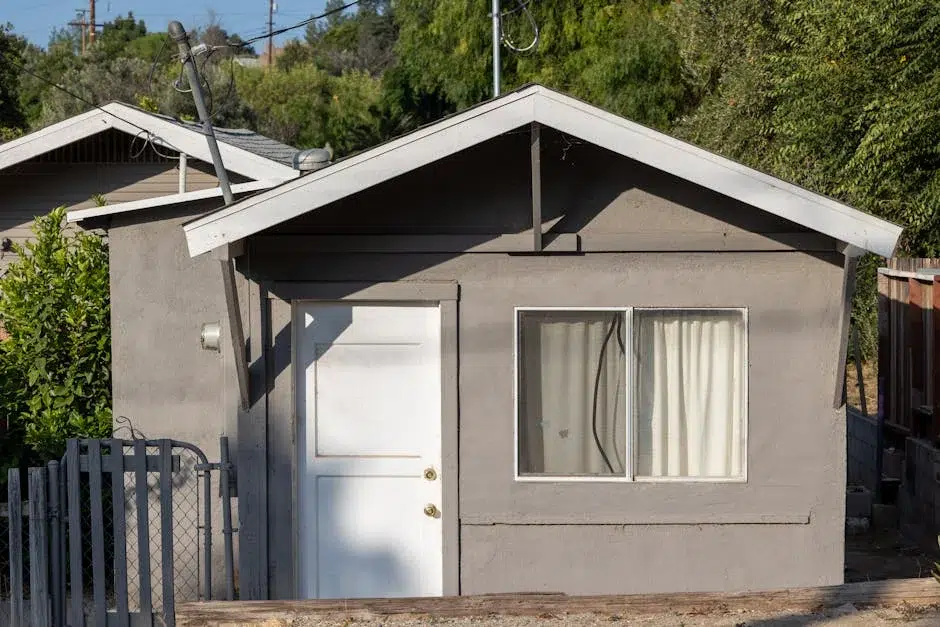
Accurate setbacks start with documentation and disciplined measurement. We treat setback compliance as a coordination task between design, surveying, and structural engineering. When these disciplines operate in isolation, errors slip through.
Professional-level planning for San Diego ADU setback requirements should include:
- Stamped site plan prepared from a current boundary survey, not a decades-old plot plan.
- Dimensioned foundation layout showing exact distances from property lines to face of concrete, not just to framing.
- Encroachment review for roof overhangs (often limited to specific projection distances).
- Fire separation compliance per California Residential Code (CRC) Table R302.1 when walls are within 5 feet of a property line.
- Utility clearance planning to avoid conflicts with sewer laterals or SDG&E easements.
We’ve seen plans rejected because the designer dimensioned to the siding rather than the foundation, shrinking the true setback by several inches. That detail alone can trigger corrections. Another common issue is ignoring recorded easements; building within an access easement can halt a project even if zoning setbacks are met.
In San Diego neighborhoods with narrow infill lots, we coordinate early with structural engineers to adjust shear wall placement if a 4-foot setback creates limited wall length. Proper nailing schedules, hold-down anchors such as Simpson Strong-Tie HDU series, and fire-rated exterior assemblies become critical when building close to property lines.
High-quality work means anticipating these constraints before plan check, not reacting after comments arrive.

What Happens If Your ADU Doesn’t Meet the 4-Foot Rule?
Setback issues usually surface during plan check or field inspection. When that happens, options depend on how far off the structure is and whether construction has started.
If the ADU is still on paper, we typically:
- Revise the site plan and architectural sheets.
- Update structural calculations if wall lengths change.
- Resubmit to Development Services for review.
If construction has begun and the foundation is already poured inside the setback, solutions become more complex. We’ve seen a project where the slab was 9 inches too close to the rear line. The owner faced either a costly variance application – with no guarantee of approval – or partial demolition and re-pour.
Correction costs may range from a few thousand dollars for redesign and resubmittal to significantly higher if demolition is required. In San Diego, total impacts might range from $3,000 to $25,000 or more depending on:
- Site complexity and lot constraints
- Material and labor costs at the time of correction
- Total project scope and how much work is already completed
Time impacts can add 4 to 12 weeks due to redesign and plan review cycles. These figures are preliminary benchmarks for informational purposes only and do not constitute a binding quote. An on-site evaluation is required for a final proposal.
Early verification costs far less than late-stage correction.
Confirm Your ADU Setbacks Before You Submit Plans

FAQs
What are the minimum ADU setback requirements in San Diego?
Do setback rules change if I convert an existing garage into an ADU?
How much does it cost to fix a setback violation on an ADU project?
- Site complexity and lot constraints
- Material and labor costs at the time of correction
- Total project scope and how much work is already completed